Vegan Meal Prep for Beginners: A Simple Weekly Plan
Vegan meal prep for beginners, with a simple weekly plan, protein ideas, batch-cooking steps, storage tips, and flavor boosters.
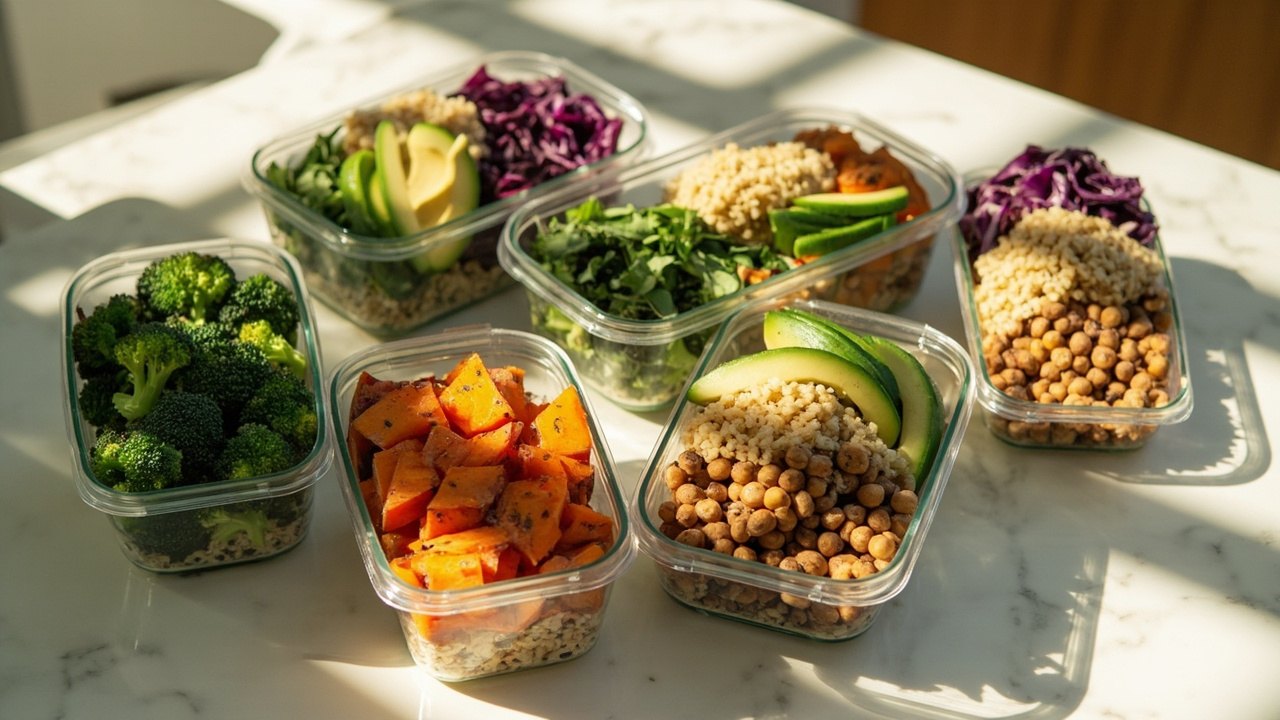
Vegan meal prep means planning, cooking, and storing a week’s worth of plant-based meals so you can eat quickly without wasting food. This beginner-friendly weekly plan combines beans, grains, vegetables, and sauces, with simple prep methods that keep cooking and cleanup manageable.
The short version
- Choose one grain, one bean, two vegetables, and one sauce as your weekly base.
- Cook components separately, then assemble five or six balanced meals in about an hour.
- Include a dependable protein source at lunch and dinner.
- Refrigerate cooked food within 2 hours and eat most leftovers within 3-4 days.
What are the best protein sources for vegan meal prep?
The best proteins for vegan meal prep are foods that are filling, affordable, and easy to cook in batches. You do not need a different protein for every meal; a few dependable choices can carry you through the week.
- Beans and lentils: Great for chili, curry, soups, bowls, and tacos. They add fiber and stay hearty after reheating.
- Chickpeas: Roast them for grain bowls, mash them into a sandwich filling, or simmer them with vegetables and spices.
- Tofu and tempeh: Both work well in stir-fries, sheet-pan meals, and noodle dishes. Pressing tofu before cooking helps it brown and develop a better texture.
- Seeds and nuts: Pumpkin seeds, cashews, almonds, and peanuts can add protein, crunch, and richness to salads, sauces, and breakfast bowls.
- Plant-based prepared proteins: These can make meal prep faster, but check the label and choose options that balance protein with fiber and sodium.
A practical protein rotation is beans on Monday, tofu on Wednesday, and lentils or tempeh later in the week. Portioning each source into meal-sized containers at the start of the week makes it easier to build balanced plates.
What does a simple weekly vegan meal prep plan look like?
A simple plan uses a mix of familiar meals rather than attempting something new every night. This seven-day example assumes a household of one, but every quantity is easy to multiply.
| Day | Meal | Main components |
|---|---|---|
| Monday | Mediterranean chickpea bowls | Chickpeas, brown rice, cucumber, tomatoes, tahini-lemon dressing |
| Tuesday | Black bean tacos | Black beans, corn tortillas, cabbage, salsa, avocado |
| Wednesday | Ginger tofu stir-fry | Tofu, broccoli, carrots, rice, soy-ginger sauce |
| Thursday | Lentil vegetable soup | Lentils, carrots, celery, tomatoes, whole-grain bread |
| Friday | Chickpea pesto pasta | Whole-wheat pasta, chickpeas, spinach, basil pesto |
| Saturday | Flexible snack plate | Hummus, vegetables, crackers, fruit, and roasted chickpeas |
| Sunday | Make-ahead grain bowl | Brown rice, roasted vegetables, edamame, sesame dressing |
Sunday’s grain bowl can use leftovers from the week, making it useful for clearing the refrigerator before the next planning session. If you prefer six prepared lunches instead of seven dinners, move the soup or tacos to another workday and keep one evening free for leftovers or a quick meal.
This weekly structure also makes grocery shopping easier. You can buy a few shared ingredients and use them in several meals: cilantro for the tacos and bowls, sesame in the stir-fry and dressing, and spinach in both the pasta and grain bowl.
What do you need before you start vegan meal prep?
You need only a small collection of tools, plus food you genuinely enjoy eating. Start with the equipment already in your kitchen and add specialty items only when they save you meaningful time.
- Storage containers: Choose a mix of shallow meal containers and smaller boxes for snacks, sauces, and chopped vegetables.
- Sheet pans: These simplify roasted vegetables, chickpeas, tofu, and plant-based prepared proteins.
- A large pot: Cook a batch of rice, quinoa, beans, or a soup without crowding the pot.
- Cutting board and knife: A stable board makes chopping vegetables faster and safer.
- Measuring spoons and cups: Consistent portions make it easier to repeat a recipe successfully.
- Food labels and a pen: Date prepared food when storing it, especially if several containers look similar.
Plan for one or two “building block” batches instead of completing several full recipes. For example, cook a pot of brown rice, roast a sheet pan of vegetables, and make a simple lemon-tahini dressing. Those components can become bowls, wraps, salads, and grain plates throughout the week.
How do you batch-cook without making every meal the same?
Batch-cooking works best when you separate the meal into reusable components. Prepare the base, protein, vegetables, and sauce once, then combine them in different ways.
- Choose three meals you already like. Repeating a favorite is easier than learning a complicated recipe during a busy week.
- Make a shared base. Cook a large batch of rice, quinoa, pasta, or roasted sweet potatoes.
- Prepare two proteins. Simmer one pot of beans and roast tofu, tempeh, or chickpeas on a sheet pan.
- Roast several vegetables. Use the same tray for broccoli, peppers, zucchini, or cauliflower with olive oil and seasoning.
- Mix two sauces. A lemon-tahini sauce and a soy-ginger sauce cover both familiar bowls and stir-fries.
- Assemble while everything is warm. Divide the components among containers, then add fresh or delicate ingredients later.
Do not season each container heavily during prep. Strong sauces, salty beans, and heavily spiced vegetables can become overpowering after several days of storage. Add the brightest flavors just before eating when possible.
For a make-ahead lunch, place dressing in a separate small container and pack leafy greens on top of the grain so they do not wilt. For hot meals, keep noodles or rice separate from saucy vegetables until you are ready to reheat everything together.
How long does vegan meal prep last?
Most refrigerated vegan meals last 3-4 days, but their ingredients may taste best earlier in that window. Freezing portions you cannot eat promptly gives you more flexibility.
- Refrigerate promptly: Transfer cooked food to the refrigerator within 2 hours. If you are in a very warm environment, begin cooling it sooner.
- Use shallow containers: Smaller portions cool faster and are easier to reheat evenly.
- Eat delicate meals first: Salads with fresh lettuce, cucumber, or tomatoes are usually best during the first few days.
- Freeze sturdy meals: Soups, chilis, curries, cooked grains, and marinated tofu freeze well. Cool them before covering, label the date, and thaw safely in the refrigerator.
- Revive with moisture: Add a splash of water, broth, or sauce when reheating rice, noodles, or vegetables that seem dry.
Reheat food until steaming hot throughout. A microwave may leave cool spots in a large container, so stir halfway through and check several areas. If a meal smells unusual, looks discolored, or has been stored longer than planned, discard it rather than relying on smell alone.
Keep sauces and toppings in separate containers when they can spoil quickly or make a meal soggy. Creamy dressings, cut avocado, and freshly chopped herbs generally benefit from being added shortly before eating.
Which flavor boosters make plant-based meals taste better?
The most useful flavor boosters are contrast, acidity, texture, and aromatic herbs. A simple bowl can taste exciting when it includes something crisp, something tangy, and a sauce with enough character.
- Lemon or vinegar: A squeeze of lemon, splash of red-wine vinegar, or drizzle of balsamic dressing brightens beans and grains.
- Nut or seed butter: Peanut butter, tahini, almond butter, or sunflower seed butter adds richness to sauces and bowls.
- Fresh and dried herbs: Cilantro, basil, parsley, dill, cumin, smoked paprika, and dried oregano create variety without extra cooking.
- Crunchy toppings: Toasted seeds, crushed peanuts, roasted chickpeas, or cabbage add texture to soft meals.
- Sweet-savory sauces: Combine maple syrup or date syrup with soy sauce, mustard, or tahini for a balanced dressing.
- Roasted aromatics: Cooking onions, garlic, or ginger until golden gives soups, curries, and sauces a deeper flavor.
Three sauces to make once
Lemon-tahini: Stir together tahini, lemon juice, warm water, salt, and a little minced garlic. Add water gradually until the dressing is pourable.
Sesame-ginger: Mix soy sauce, rice vinegar, sesame oil, grated ginger, and a small amount of maple syrup or sugar. The exact sweetness depends on how salty the soy sauce is.
Herby green sauce: Blend parsley, basil, spinach, lemon juice, olive oil, salt, and a splash of water. Use it on bowls, beans, potatoes, or sandwiches.
Common mistakes to avoid
- Preparing too many unfamiliar dishes: You are more likely to eat your meals if they are enjoyable and familiar.
- Waiting until Sunday evening: Choose a realistic cooking window and stop when the planned components are ready.
- Leaving the refrigerator to do all the work: Soups, curries, and overnight oats are useful, but they still need attention and timely refrigeration.
- Storing everything mixed together: Noodles become mushy, greens wilt, and crisp toppings lose their texture.
- Forgetting seasoning: Add salt, pepper, and spices during cooking, then taste each batch before portioning it.
- Ignoring food safety: Refrigerate cooked food within 2 hours, and do not keep most cooked leftovers beyond 3-4 days in the refrigerator.
- Buying ingredients you will not use: A short ingredient list reduces waste and makes your next prep session faster.
Frequently asked questions
How much food should I prep for one person?
Most people can manage five or six prepared meals in a week, plus a flexible meal for leftovers or dining out. Start with five if you are unsure how often you will eat leftovers, and adjust the next week based on what you actually finish.
Can I meal prep without buying special containers?
Yes. Ordinary glass or plastic containers with lids work well, and they do not need to match. Reusable takeout containers, small jars for sauces, and even clean takeout boxes can all be useful for vegan meal prep.
Do I need to cook every meal from scratch?
No. Store-bought roasted vegetables, cooked grains, canned beans, and plant-based prepared proteins can shorten the process. Just check labels for added sugar or sodium, and pair convenience foods with fresh vegetables and a flavorful sauce.
What is the easiest vegan meal prep for beginners?
Begin with two grain bowls, one soup, and one taco meal. They share ingredients, require only a few cooking methods, and make leftovers easy to repurpose. This approach makes vegan meal prep approachable without turning the week into nonstop cooking.
Choose five lunches and three dinners you already love, add your first two to the grocery list, and schedule a 60-minute prep session. Once the containers are labeled and chilled, your next meal is already handled.