Road Trip Ideas for Kids for a Happier Family Journey
Road trip ideas for kids with easy games, activity kits, screen balance, motion sickness tips, smart stops, and simple routines for a calmer family journey.
Road trip ideas for kids combine short, playful activities with planned breaks, familiar snacks, and enough quiet time for everyone to reset. The best ideas suit the ages in your car, work offline when coverage is poor, and give children choices without making the journey feel like another school day. Start with a simple kit and a flexible stop plan.
The short version
- Pack one activity kit per child and rotate activities every 30 to 60 minutes.
- Choose a mix of games, creative tasks, audio stories, and screen time rather than relying on one option.
- Plan a short break every two hours, with food, movement, and a bathroom stop included.
- Keep motion sickness remedies and familiar comfort items accessible, not buried in a suitcase.
What are the best road trip ideas for kids?
The most useful road trip ideas for kids are simple enough to begin without explanation and flexible enough to end when a child loses interest. Focus on activities that children can choose themselves, because small control often prevents boredom from turning into a complaint.
For younger children, magnetic tiles, stickers, crayons, and a favorite small toy work well. Older travelers may enjoy an audio challenge, a card game, a journaling prompt, or a route-based scavenger hunt. Teenagers usually appreciate being consulted about the plan rather than handed a long list of rules.
- Low-effort games: I-spy, twenty questions, category games, and finding license plates from states you have not seen.
- Creative projects: A travel drawing pad, postcard stationery, or a small album for collecting ticket stubs.
- Audio options: Downloaded stories, songs, or podcasts that do not depend on cell coverage.
- Social play: Conversation cards, family trivia, or prompts such as “name something that starts with B.”
Make the first activity deliberately easy. A game that starts with one cheerful round is more likely to catch everyone’s attention than a complicated craft requiring several instructions.
How do you keep kids entertained on a long drive?
Keep kids entertained by mixing active, quiet, creative, and listening activities instead of expecting one choice to work for the entire trip. A simple rotation gives children variety while helping adults avoid constantly inventing new ideas.
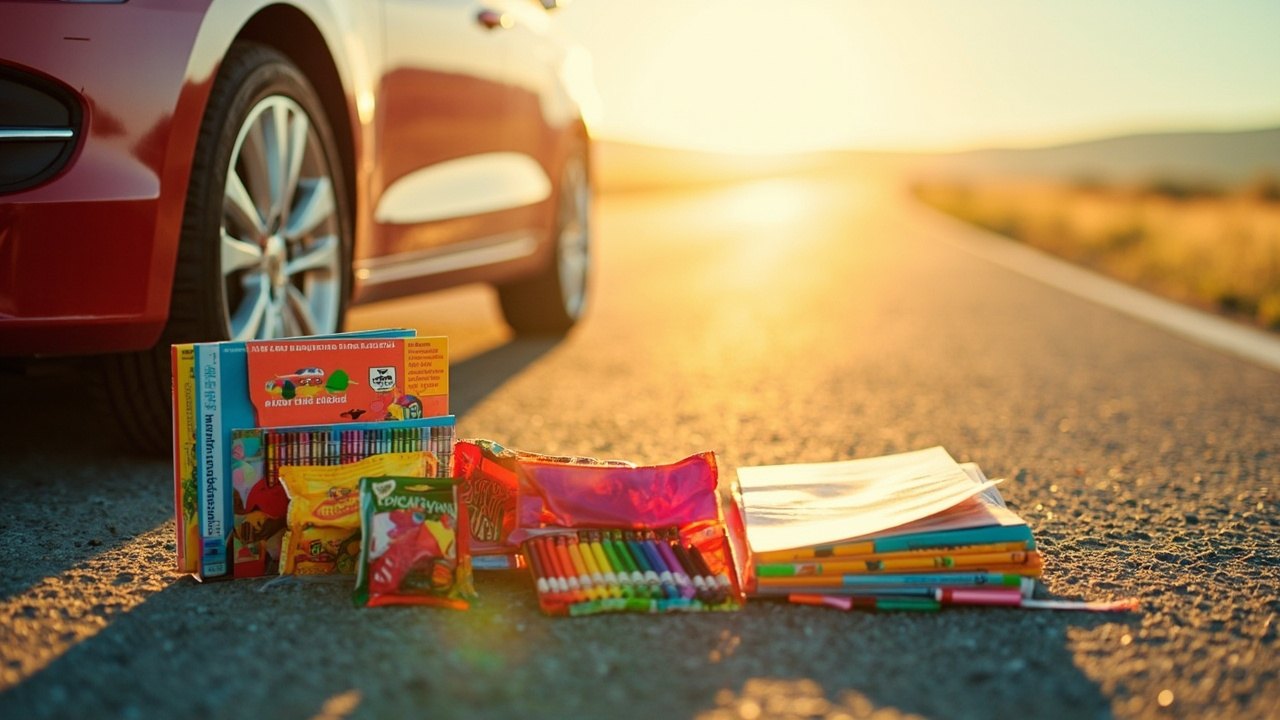
Set up a “travel drawer” within reach of an adult but out of the driver’s view. Include crayons, paper, stickers, a deck of cards, headphones, a small puzzle, and two or three current favorite books. Let each child select the opening activity.
- Start with a shared game. Begin with twenty questions, a guessing game, or an I-spy activity that includes everyone.
- Offer choices in pairs. Let the child pick between drawing and stickers, or between an audio story and a puzzle.
- Rotate before frustration appears. Switch activities around the time attention begins to drift rather than waiting for arguments.
- End with a calm option. Save a familiar book, quiet puzzle, or low-stimulation playlist for the final portion of the drive.
Keep travel games age-appropriate and avoid anything that requires the driver to participate. If children become overly competitive, praise effort, silliness, or a personal best rather than winning.
How do you balance screens and offline play?
Balance screens by treating them as one tool among several, not as the automatic answer to a long drive. A clear plan works better when the rule is predictable and does not change every time a child asks for a device.
Before leaving home, download any approved shows, games, music, or audiobooks and make sure the device is charged. Open the relevant app and check that offline content is available. To connect to a vehicle hotspot or local Wi-Fi, open Settings, then Wi-Fi or the relevant network option; exact menus vary by device and version.
| Activity | Best for | What to bring |
|---|---|---|
| Drawing and stickers | Young children | Paper, crayons, stickers |
| Card and board games | School-age children | Familiar deck or travel game |
| Audio stories | Quiet listening time | Headphones and downloaded content |
| Screen entertainment | Focused or winding-down time | Charged device and offline downloads |
| Conversation prompts | Whole car | Six to twelve written questions |
For more road trip ideas for kids, pair each screen period with an offline activity. A movie can be followed by a drawing break; a game can end with an audio story. This avoids the impression that the screen is the only acceptable choice.
What helps with motion sickness on family trips?
General motion sickness relief often begins with a light meal, steady hydration, and a view of the horizon, but symptoms vary by child. Ask your child’s pediatrician or pharmacist about suitable options before the trip, especially for medicine.
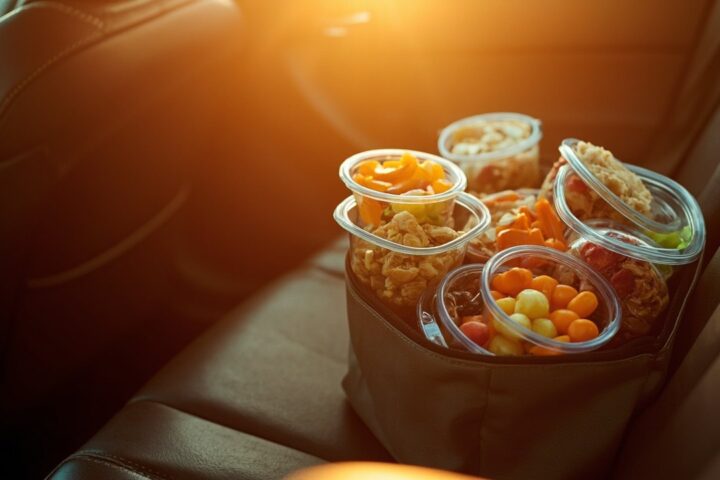
Offer small, familiar foods rather than a heavy or greasy meal immediately before departure. Keep water, crackers, plain pretzels, or another simple snack within reach. Avoid strong odors and let everyone know that stopping briefly is better than pushing through nausea.
- Point the child toward the horizon or a distant view when they feel queasy.
- Use the vehicle’s ventilation system for fresh air at a comfortable temperature.
- Reduce reading and close screen viewing if a child already feels unwell.
- Stop in a safe place if symptoms become severe, and seek medical advice when needed.
Do not treat severe vomiting, unusual dizziness, or a child’s condition that differs from previous episodes as a routine travel problem. These road trip ideas for kids are most helpful when paired with advice from someone familiar with the child’s health history.
Which family-friendly stops make the drive better?
The best stops are short, safe, and useful enough that everyone gets out of the car without starting a complicated outing. Plan two or three options rather than filling the itinerary, and allow time for the unexpected.
Look for a park with space to walk, a playground, a picnic table, a clean bathroom, and an easy place to park. A viewpoint, rest area, lakeside trail, or small town café can break up the drive without requiring admission tickets or reservations.
- Movement stop: Choose a place for a 15-minute walk, a short nature discovery, or some playground time.
- Food stop: Pick a location with familiar meals, snacks, seating, and a bathroom nearby.
- Curiosity stop: Visit a museum exhibit, historic marker, unusual store, or roadside attraction worth a brief look.
Tell children what will happen at the next stop so the drive has a clear ending. These road trip ideas for kids work best when the stop offers a defined activity rather than simply saying, “We’ll find something fun.”
How do you build a simple road trip routine?
Build a road trip routine that anchors the day without making the schedule inflexible. A predictable sequence helps children understand what comes next, while occasional flexibility keeps the journey comfortable.
A useful pattern is conversation and music in the first stretch, a creative activity next, a movement break, then a screen or audio period after lunch. Repeat familiar parts each day on a multi-day trip so the child knows when books, games, and stops are likely to appear.
- Before departure: Let children choose one activity for the first segment and identify the first planned stop.
- During the drive: Check in at natural transitions, such as fuel stops and meal breaks, rather than every few minutes.
- At each stop: Aim for food, movement, and a bathroom before adding anything else.
- Before arrival: Use a calm, familiar activity and keep the final hour simple.
Prepare both a realistic plan and a backup plan. If the weather turns poor, the roadside stop is crowded, or the family needs more quiet, switch to an audiobook, drawing, or a snack break at home.
Common mistakes to avoid
- Packing too many activities: Bring a few reliable choices instead of everything the children might enjoy at home.
- Waiting until boredom becomes a fight: Rotate activities before everyone is fed up.
- Scheduling every minute: Leave room for meals, bathroom breaks, delays, and short attention spans.
- Depending on cell coverage: Download content and bring physical activities for low-service areas.
- Making screens an unpredictable reward: Set clear viewing times so the device does not become the focus of negotiations.
- Forgetting adult comfort: Bring your own snacks, water, charging cable, and layers; caregiver needs affect the whole group.
Frequently asked questions
How long should road trip activities last for kids?
Most children do better with short activity blocks rather than one project expected to last for hours. Offer a new option every 30 to 60 minutes, based on the child’s age, mood, and the length of the drive.
What are good activity kits for a road trip?
A useful activity kit contains paper, crayons, stickers, cards, and one or two small games. Add headphones with downloaded audio or a puzzle for older children, and place each kit where an adult can supervise it without distracting the driver.
Should kids have screens on every road trip?
No. Screens can be useful for winding down, watching a downloaded film, or occupying one child while another rests, but a mix of play and listening is usually more varied. Agree on the plan before departure and repeat it each day.
How often should you stop on a family road trip?
Plan a break about every two hours, even when children seem comfortable. Look for a safe location with a bathroom, drinking water, light food, and room to move; a 15-minute walk or snack can prevent later fatigue.
Pack the activity drawer, download offline entertainment, and choose the first stop before you leave. Even one thoughtful game and one well-planned break can make the journey calmer for everyone.