Bacon in Air Fryer: Crisp Strips With Less Mess
Make bacon in air fryer with practical temperatures, timing for regular and thick-cut strips, smoke control, grease tips, batch methods, and safe storage.
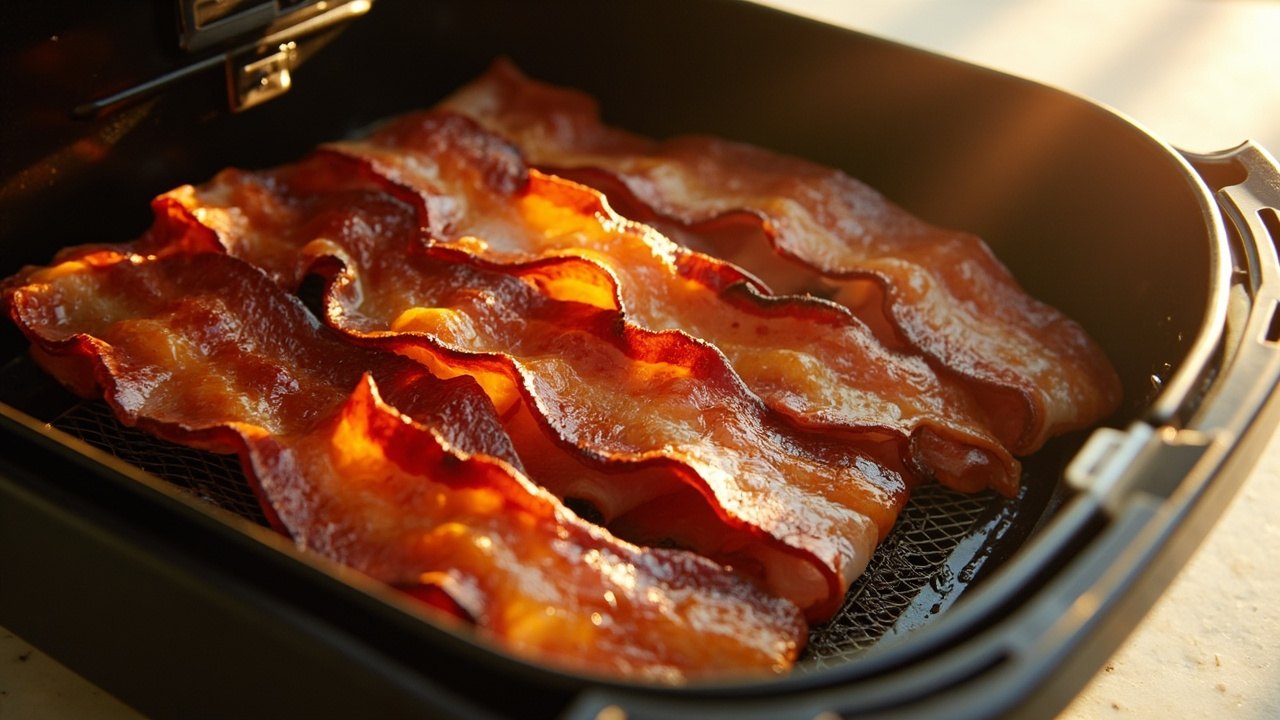
Cooking bacon in air fryer usually takes 6–12 minutes at 350–400°F for regular strips, or about 10–18 minutes for thick-cut bacon. Start checking early, cook in a single layer, and adjust for your fryer’s instructions; bacon is done when crisp and the thickest pieces reach the safe internal temperature.
The short version
- Regular-cut bacon: cook at 350–400°F for roughly 6–12 minutes.
- Thick-cut bacon: start at 350–375°F and allow about 10–18 minutes.
- Keep strips uncrowded, and add a small amount of water to the drip drawer only if your manual permits it.
- For food safety, cook pork to at least 145°F and let it rest for 3 minutes.
How long do you cook bacon in an air fryer?
Regular bacon usually needs 6–12 minutes at 350–400°F, while thick-cut bacon generally takes 10–18 minutes at a slightly lower temperature.
These are practical starting ranges, not universal rules. Air fryers differ in basket size, heating element placement, fan strength, and temperature accuracy, so the manual for your model should guide the cook.
- Preheat the fryer. Set it to 375°F and allow 3–5 minutes to preheat. If your model does not require preheating, follow the manual instead.
- Arrange the strips. Place the bacon in the basket in a single layer, leaving space between pieces so hot air can circulate.
- Start with the shorter time. Check regular-cut bacon after about 6 minutes and thick-cut bacon after about 10 minutes. Cooking packages vary, so begin checking before the recommended maximum.
- Adjust as needed. Turn or rotate long strips with tongs if your fryer’s instructions recommend it. Continue cooking in 1–2 minute increments until the bacon reaches your preferred crispness.
- Check the thickest piece. For food safety, the USDA recommends a minimum internal temperature of 145°F for pork, followed by a 3-minute rest. Well-done bacon is usually darker and firmer than the minimum safe temperature.
| Bacon type | Useful temperature range | Starting time |
|---|---|---|
| Regular-cut | 350–400°F | 6–12 minutes |
| Thick-cut | 350–375°F | 10–18 minutes |
| Pre-cooked | 300–350°F | 3–6 minutes |
Transfer finished bacon to a clean plate rather than leaving it on the drip tray. Excess grease collects beneath the basket and can cool or soften the underside of the strips.
How do you make bacon in air fryer crispy?
The key to crispy bacon is a hot fryer, an uncrowded basket, and enough cooking time for the fat to render while the edges become firm.
For the best bacon in air fryer results, choose strips of similar thickness and avoid overlapping pieces. If the bacon curls into a hard shape, carefully straighten it with tongs after the first few minutes.
Pat the bacon dry
Blot each strip with a paper towel before cooking. Surface moisture slows browning, and removing a little excess fat can reduce splattering. Do not soak or rinse the bacon, because additional water will interfere with crisping.
Use the right amount of heat
375°F is a useful starting point for many fryers because it cooks the fat steadily without burning thin edges too quickly. Lean toward the upper end for thin bacon and the lower end for thick slices. Your fryer’s manual may offer a bacon setting or recommend a different range.
Finish only when the edges look ready
Look for lightly browned edges, a firm texture, and rendered fat. Avoid cooking solely for a preset time, since package thickness and your appliance can produce very different results. Move finished pieces to a plate so they do not continue steaming over the drip tray.
Should you put water in the air fryer drawer?
Yes, a small amount of water in the drip drawer can discourage smoke, but only if the manufacturer specifically allows water there.
Some fryer manuals describe adding a few tablespoons of water or using a designated cup to keep drippings from smoking. Follow those directions exactly. Never pour water into the cooking basket, and do not add enough to touch the bacon or heating element.
If bacon in air fryer starts smoking before it is fully cooked, lower the temperature if your model permits and check the drip drawer. More smoke may mean that grease has pooled, the drawer is overfilled, or the high setting is browning the fat faster than the fan can clear it.
Water is not a substitute for managing grease. Empty the drawer when instructed, keep vents unobstructed, and avoid letting accumulated drippings solidify around the heating area. A clean fryer also cooks more evenly and is less likely to produce smoke during the next batch.
How do you keep bacon from getting greasy?
You cannot remove all the fat, but you can keep it from pooling under the food and splattering around the appliance.
Most air fryers have a perforated basket and a separate drip drawer or pan. Put the bacon in the basket and let rendered fat fall into that lower pan. If your model includes a removable collection cup, use it and empty it after the meal.
- Do not cover the basket holes with foil, silicone, or parchment unless the manual permits it.
- Do not place loose parchment directly under the bacon; it can lift into the heating element or block airflow.
- Never fill the drip pan beyond its marked capacity.
- Use tongs or a fork to move the bacon, rather than tipping the basket and pouring hot grease into the sink.
Let hot grease cool before disposal. Pour it into a heat-safe container, seal it, and put it in the trash when it is solid or according to local disposal guidance. Do not mix cooking oil with household drain chemicals.
How should you batch bacon in an air fryer?
Cook small batches so every strip has space around it, and begin the second batch only after the first batch is removed.
When cooking bacon in air fryer in batches, avoid stacking strips or placing them side by side so closely that air cannot move between them. Touching pieces can steam one another, leaving them limp underneath even when the exposed edges are crisp.
- Divide the strips evenly. Choose a batch size that fits comfortably in one layer without bending the pieces.
- Use the same cook time for similar pieces. Very thin strips may need less time than thick slices, so keep them separate when possible.
- Move the first batch to a plate. The plate should be heat-safe because the bacon and its rendered fat will be very hot.
- Check the drawer. If grease is accumulating, let it cool briefly and empty it before adding more bacon.
- Cook the next batch promptly. The residual heat in the fryer may shorten the preheating time, but follow the manual if it directs you to preheat for each batch.
For an especially large amount, it is usually more efficient to prepare several smaller batches than one crowded basket. Cooked bacon can also be reheated later rather than leaving the first batch exposed while the rest finishes.
How do you store cooked bacon?
Refrigerate cooked bacon in a covered container within 2 hours and use it within 3–4 days, consistent with guidance for most cooked leftovers.
Place the bacon on a plate or in an airtight container so the rendered fat does not spread through the refrigerator. If you want crisp bacon, keep the container loosely covered for the first few minutes of refrigeration, then seal it fully. Fully sealing bacon while it is still warm traps steam and softens the surface.
For longer storage, freeze the bacon in a freezer-safe bag or container with as much air removed as practical. Label the container with the date and thaw it in the refrigerator when needed. Thawing in the refrigerator is slower and safer than leaving the package on the counter.
Common mistakes to avoid
- Crowding the basket: Close pieces touch and steam instead of crisping uniformly.
- Leaving the bacon in the fryer after cooking: The strips continue to cook and soften as they sit over the hot basket.
- Using an unapproved liner: Foil or parchment can block airflow, lift into the heating element, or interfere with the drip system.
- Cooking only for the maximum time: Thin bacon can burn before thick pieces are ready, so begin checking early.
- Overfilling the drip drawer: Grease can spill into the heating chamber and cause heavy smoke.
- Adding water against the manual: Some appliances do not permit water in the drawer and may use a different grease-collection system.
- Pouring grease down the drain: Hot cooking fat can solidify in pipes and create a blockage.
Frequently asked questions
Should you flip bacon in an air fryer?
You do not always need to flip it, but turning long strips halfway through can help both sides brown evenly. Use tongs and work carefully because the rendered fat will be hot. If the bacon is thin enough to remain flat, leave it undisturbed so the hot basket can crisp the underside.
Can you cook frozen bacon in an air fryer?
Yes, but separate the strips and remove any ice that would keep them stuck together. Give frozen bacon several extra minutes and begin checking early, since the pieces may finish unevenly. For the most predictable results, thaw it in the refrigerator before cooking.
How do you reheat bacon in air fryer without drying it out?
Place the bacon in a single layer at about 300–350°F and heat it in short intervals until warm and crisp. Start checking after 2–3 minutes, and stop as soon as the desired texture is reached. A lightly dampened paper towel beneath the bacon can help, provided your fryer manual allows it.
Why is bacon in air fryer not getting crispy?
The most common causes are overcrowding, excess moisture, a crowded drip drawer, or cooking at too low a temperature. Spread the strips apart, blot any wet surfaces, and make sure hot air can circulate freely. Also check that the bacon was actually moved off the basket after cooking, because trapped steam quickly softens it.
Choose your most evenly cut package, preheat the fryer to 375°F, and make your first regular-cut batch with about 6 minutes of cooking time; then adjust from there. That simple starting point gives you a reliable baseline without risking burned strips.