Breakfast Meal Prep: Easy Make-Ahead Ideas for the Week
Breakfast meal prep makes mornings easier with make-ahead eggs, oats, burritos, and smoothie packs, plus storage, reheating, and weekly planning tips.
Breakfast meal prep means cooking, portioning, and storing breakfasts ahead of time so mornings are faster and easier. The most useful approach is to choose a few repeatable make-ahead foods, prepare them safely, and set a simple weekly plan that fits your schedule and appetite.
The short version
- Prep two breakfasts on Sunday, then refill one or two more times during the week.
- Make versatile bases: hard-boiled eggs, overnight oats, breakfast burritos, and frozen smoothie packs.
- Refrigerate cooked food within two hours, and plan to use most cooked leftovers within three to four days.
- Keep the plan flexible: choose one protein, one grain, one fruit, and one sauce or topping per breakfast.
What is breakfast meal prep?
Breakfast meal prep is the practice of preparing ingredients or complete breakfasts before you need them, usually for several days or an entire week. Instead of deciding what to eat while coffee is brewing, you can cook a batch of eggs, assemble oats, or freeze burritos and then simply grab, heat, and eat.
The best system is not the most complicated one. Many people do well with a mix of ready-to-eat and reheatable options. Hard-boiled eggs and yogurt-and-fruit cups need little preparation, while oatmeal, egg muffins, and burritos work well when you want a warm breakfast.
For a successful breakfast meal prep routine, start with foods you genuinely enjoy eating. Preparing a large container of something you dislike is not a time saver. Choose familiar flavors, vary the toppings, and keep portions appropriate for the number of breakfasts you need.
What do you need to get started?
You need only a few basic supplies: a reliable refrigerator with enough space, airtight containers, a sheet pan or baking dish, a pot for cooking eggs or oats, and a way to label portions. A microwave is convenient for reheating, but it is not required if you are happy with cold breakfasts.
Choose containers that fit the food. A wide, shallow container is useful for burritos and egg dishes, while individual jars or cups are convenient for oats, yogurt, fruit, and smoothie mixtures. If you are freezing portions, use freezer-safe containers or bags with a little space left for expansion.
Before shopping, decide how many breakfasts you want to prepare. For one person, five to seven breakfasts is often manageable. A larger household may need more, but it is better to prepare a smaller batch and repeat the process than to create a week of leftovers you will not finish.
A simple shopping list
- Eggs for boiled eggs, omelets, or egg muffins
- Rolled oats, chia seeds, milk, and your preferred toppings
- Flour tortillas, black beans, cheese, eggs, and vegetables for burritos
- Fresh or frozen fruit, leafy greens, and a simple yogurt or smoothie base
- Cooking oil, salt, pepper, and any sauces or spices you enjoy
You can also prep ingredients rather than entire meals. For example, cook extra grains, wash fruit, portion nuts, and mix a spice blend. This gives you flexibility on busy mornings without committing you to the same breakfast every day.
How long does cooked breakfast food keep?
Most cooked breakfast leftovers keep three to four days in the refrigerator when stored properly. Refrigerate cooked food within two hours of cooking, transfer it to shallow containers, and keep the refrigerator at or below 40°F. Food that has been sitting out longer than two hours should be discarded rather than saved.
Different foods have slightly different needs. Hard-boiled eggs should be refrigerated in their shells or in a sealed container, and cooked egg dishes are best used within a few days. Oatmeal can be kept for several days, but you may want to add fresh fruit, nuts, or yogurt at serving time so the texture stays appealing.
Burritos with cooked meat, beans, eggs, or cheese are convenient refrigerator leftovers, especially if you wrap each one individually. Leave the filling exposed until just before reheating if possible, or wrap loosely in foil. This helps reduce sogginess. If you want to store them longer, freeze them instead.
Freezer storage gives you more options than the refrigerator alone. Freeze cooked burritos, individual portions of oatmeal, egg muffins, or smoothie packs on a flat tray before moving them into a larger freezer container. Properly frozen food can remain safe for months, although quality is usually best within the first few weeks. Thaw portions in the refrigerator overnight when possible.
A quick storage guide
| Breakfast | Refrigerator | Best reheat or serving method |
|---|---|---|
| Hard-boiled eggs | Several days; keep chilled | Eat cold or warm gently |
| Overnight oats | About three to four days | Stir and add toppings |
| Breakfast burritos | Three to four days | Microwave or skillet; heat filling thoroughly |
| Smoothie packs | Use promptly after thawing | Blend with liquid until smooth |
Which breakfast foods are best for making ahead?
The best foods for making ahead are those that hold their texture, flavor, and convenience after preparation. Eggs, oats, burritos, and smoothie packs are especially useful because each can be customized and stored in individual portions. The right choice depends on whether you prefer something cold, warm, quick, or filling.
Egg dishes are versatile. Hard-boiled eggs are the simplest option and can be paired with fruit, toast, or vegetables. Egg muffins or baked egg cups are easy to reheat and travel well, though they require more assembly. For a make-ahead egg dish, crack eggs into a muffin tin with chopped vegetables, cheese, or cooked meat, then bake until the eggs are set.
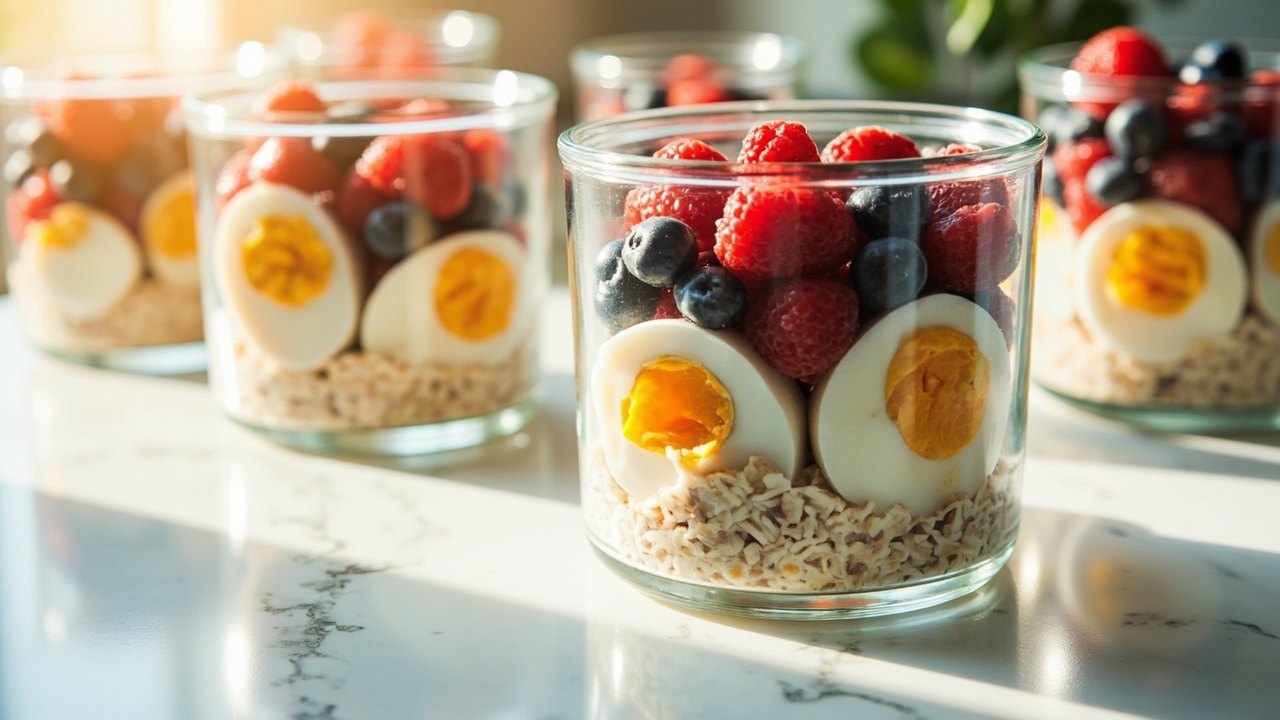
Oats are inexpensive and flexible. Overnight oats combine rolled oats with liquid and let them soften in the refrigerator. You can prepare several jars at once and add different toppings each morning, such as berries and nuts, banana and cinnamon, or apple and almond butter. If you prefer hot oatmeal, cook a batch of plain oats and portion them for later, adding liquid when reheating.
Burritos are a strong choice for a filling breakfast, especially on mornings when you need something substantial. Keep the ingredients balanced: a wrap, a protein such as eggs or beans, some vegetables, and a modest amount of cheese or sauce. Meal prep becomes easier when you prepare the fillings separately and assemble the burritos before storing them.
Smoothie packs are best for speed rather than hot food. Freeze fruit with ingredients such as oats, nuts, or yogurt in individual bags, then add milk or another liquid when you are ready to blend. If you prefer a smoother result, blend the packs first, pour the mixture into individual containers, and freeze. Leave a little room at the top because frozen liquids expand.
How do you make eggs, oats, and breakfast burritos?
You can make these breakfasts in large batches with a simple workflow: prepare the filling, cook the base, portion the food, and refrigerate or freeze it promptly. Keep each recipe consistent for your first attempt, then adjust flavors and portions to suit your preferences.
Make-ahead eggs
- Place eggs in a saucepan and cover them with cold water by about an inch.
- Bring the water to a boil, remove the pan from the heat, and let the eggs stand covered for the desired time.
- Transfer the eggs to ice water, then refrigerate them in their shells.
- For egg muffins, preheat the oven, grease a muffin tin, and fill each cup with a mixture of eggs and chopped vegetables, cheese, or cooked meat.
- Bake until the egg mixture is set, cool slightly, and store in covered containers.
For food safety, cook poultry to 165°F, ground beef to 160°F, pork to 145°F followed by a three-minute rest, and fish to 145°F. If you are combining raw eggs with cooked ingredients, cook the eggs until the mixture is firm and the center reaches 160°F.
Overnight oats
- Combine equal parts rolled oats and milk in each jar; use more liquid if you like a softer texture.
- Add chia seeds, yogurt, honey, cinnamon, or a spoonful of nut butter, if desired.
- Stir, cover, and refrigerate overnight or for at least several hours.
- Add fruit, seeds, or extra toppings just before eating.
For hot oatmeal, cook rolled oats with water or milk, portion them into containers, and refrigerate. Add a splash of liquid before reheating. Stir in toppings after heating so they do not become mushy.
Breakfast burritos
- Warm tortillas briefly so they are easier to roll.
- Fill each tortilla with scrambled eggs, beans, cooked meat, or a combination of vegetables and cheese.
- Fold in the sides, roll tightly, and wrap each burrito in foil or place it in an airtight container.
- Refrigerate for up to three to four days, or freeze on a tray before transferring to a freezer container.
Reheat a refrigerated burrito in the microwave until the filling is steaming throughout. If the tortilla is dry, wrap it in a damp paper towel or foil. For a crisper exterior, place the burrito in a skillet over medium heat and turn it until both sides are warm.
How should you make and store smoothie packs?
Make smoothie packs by preparing fruit and other sturdy ingredients in individual portions, then freezing them until you are ready to use them. This method works well because you can control the liquid and adjust the blend to your liking rather than drinking a mixture that separates.
- Choose a base such as banana, berries, mango, or pineapple.
- Add optional extras such as oats, chia seeds, nuts, spinach, yogurt, or protein powder.
- Divide the ingredients among freezer-safe bags or small containers, leaving some space for expansion.
- Freeze the packs on a flat surface, then move them to a freezer bag or container.
- To prepare a smoothie, place one or two packs in a blender, add enough milk, water, or juice to reach the desired consistency, and blend until smooth.
Do not leave thawed smoothie packs at room temperature for extended periods. Refrigerate thawed mixtures and use them promptly. If a pack has thawed completely and has been kept cold, blend it according to your normal recipe; if it has been unrefrigerated for more than two hours, discard it.
You can also make “smoothie packs” with dry ingredients only: portion oats, seeds, and freeze-dried or freezeable fruit in jars. That saves preparation time while giving you a flexible breakfast. Add fresh fruit, yogurt, or liquid on the morning you plan to eat it.
What does a simple weekly breakfast meal prep plan look like?
A simple weekly plan uses a mix of make-ahead staples so you do not prepare every breakfast the same way. One concentrated cooking session, plus a small midweek refill, can cover most mornings without turning breakfast into a major project.
On Sunday, make hard-boiled eggs, prepare five overnight-oat jars, and assemble two or three burritos. Add a fruit-and-yogurt cup or smoothie pack for any mornings when you want something cold. Keep one or two breakfasts unplanned so you can use leftovers, eat breakfast out, or adjust the plan when life changes.
For a five-day example:
- Monday: Overnight oats with berries and seeds
- Tuesday: Reheated breakfast burrito with fresh fruit
- Wednesday: Hard-boiled eggs, toast, and yogurt
- Thursday: Smoothie made from a frozen pack
- Friday: Remaining burrito or a quick bowl of oatmeal
During the week, refill only what you actually use. On Wednesday evening, for example, make another small batch of oats or boil a few eggs. This is the most sustainable breakfast meal prep approach because it reduces food waste and keeps your choices fresh.
Common mistakes to avoid
- Preparing too many identical meals and then losing interest in them.
- Leaving cooked food on the counter for more than two hours.
- Storing burritos with wet vegetables or sauces that make the tortillas soggy.
- Freezing smoothie packs without leaving room for the mixture to expand.
- Reheating food only until the outside feels warm; check that the center is hot and cooked thoroughly.
- Adding delicate toppings too early, especially fresh fruit, lettuce, and crispy ingredients.
- Labeling only some containers; date every batch so you use the oldest food first.
Frequently asked questions
Can I prepare breakfast for the entire week?
Yes, but most cooked breakfast foods are best eaten within three to four days of refrigerator storage. Freeze additional portions if you want to prepare farther ahead, or make smaller batches during the week. This gives you a backup without keeping food in the refrigerator longer than necessary.
What is the easiest breakfast to meal prep?
Hard-boiled eggs and overnight oats are among the easiest choices. Eggs require little assembly, while oats can be mixed in jars and refrigerated. If you want a hot meal, a batch of breakfast burritos is convenient because each one can be reheated individually.
Can I freeze breakfast burritos?
Yes. Wrap the burritos tightly, freeze them on a tray so they do not stick together, and then place them in a freezer container. Thaw one in the refrigerator overnight or heat it from frozen in a microwave or skillet until the filling is hot throughout.
How do I keep reheated oatmeal from becoming dry?
Add a small amount of milk, water, or both before reheating, then stir halfway through. You can also heat the oatmeal in short intervals rather than for one long stretch. Add fresh fruit, nuts, or nut butter afterward for texture and flavor.
Start with two breakfasts you will enjoy this week, choose a container and a convenient cooking time, and write them into your calendar. A short, repeatable breakfast meal prep routine is easier to maintain than an ambitious plan that does not fit your life.