How to Improve Hand-Eye Coordination: A Practical Plan
Learn how to improve hand-eye coordination with simple ball tosses, juggling, racket drills, and safe ways to progress for kids and adults.
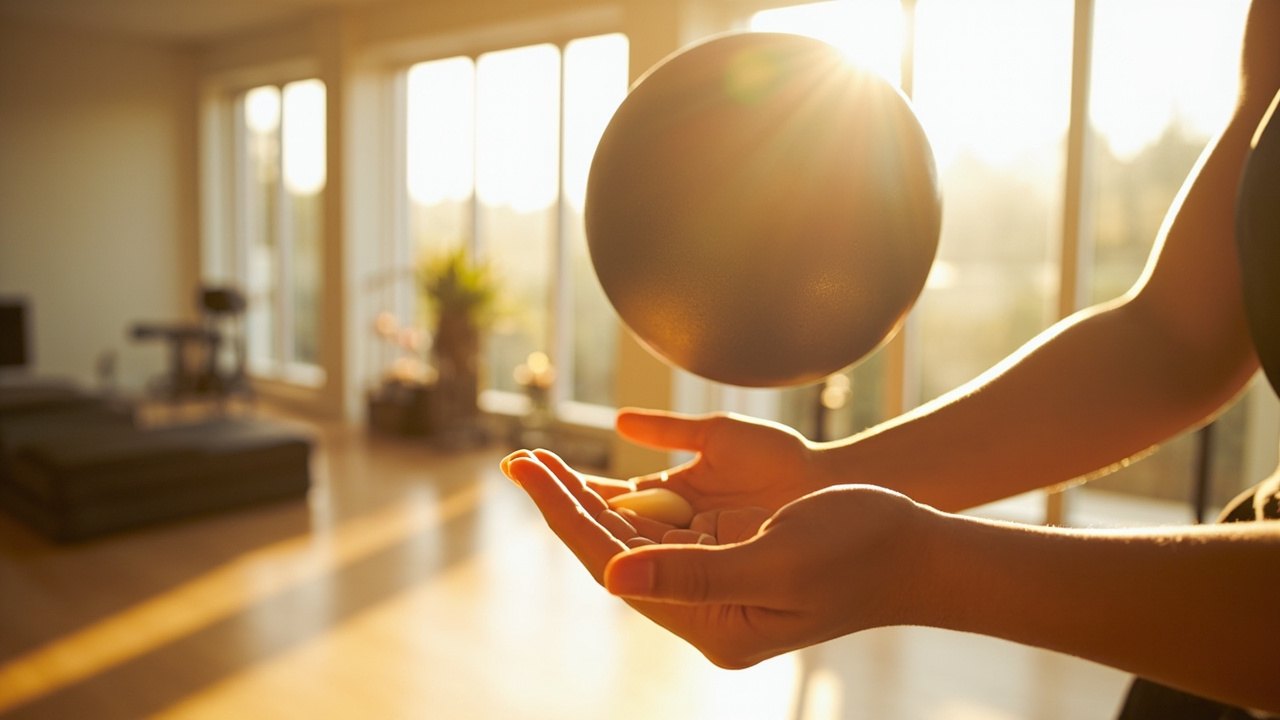
To improve hand-eye coordination, practice movements where your eyes guide your hands: catch and throw, juggle, strike, aim, and react. Start slowly, use targets of increasing difficulty, and repeat each activity consistently. Children and adults can benefit from the same basic progression, with age-appropriate equipment and adjustments for fitness, interests, and ability.
The short version
- Begin with a wall-ball toss, using one hand and then both hands.
- Add juggling with soft balls or beanbags once basic catches feel steady.
- Include racket, paddle, or sports practice to train tracking and timing.
- Use a clear goal, short sessions, and gradual increases in speed, distance, or complexity.
What is hand-eye coordination, and what improves it?
Hand-eye coordination is the ability to use what you see to guide what your hands and body do. It supports catching a ball, pouring a drink, typing, driving, using tools, and many recreational activities. Improving it means making visual reactions faster, more accurate, and easier to control.
The best practice is not simply doing an activity more often. It is giving your brain useful information: watch the ball, predict its path, make a small adjustment, and repeat. Activities that require you to track an object, judge distance, time a movement, or change direction are especially useful because they combine seeing with action.
Hand-eye coordination is one part of overall motor control. Strength, balance, mobility, attention, and confidence also influence how well you perform. You do not need to be athletic or spend hours at a gym to make progress. Short, regular sessions that are challenging but comfortable are more useful than occasional practice that always feels difficult.
Why varied practice helps
Different activities train different parts of the skill. Ball tosses emphasize hand positioning and catching. Juggling adds timing and pattern recognition. Racket sports introduce anticipation and reaction. Practicing several types of movement can make your visual-motor control more flexible than doing only one favorite exercise.
Choose activities you enjoy, because you are more likely to keep practicing them. You can also rotate activities during the week so your brain has time to respond to new challenges. The goal is not to master every drill; it is to make everyday movements more controlled and reliable.
How long does it take to improve hand-eye coordination?
Most people notice small gains within several weeks of regular practice, while larger improvements may take months of consistent work. Progress depends on the activity, starting skill, frequency, sleep, and other factors. There is no single timetable that applies to everyone, so judge improvement by steadier catches, better timing, and greater ease rather than by a fixed deadline.
For a beginner, two or three sessions of 10 to 15 minutes each week is a reasonable starting point. As control improves, you can extend sessions or add one more drill. Children may benefit from shorter, more playful sessions, while adults can treat practice like a skill session rather than an all-or-nothing workout.
Give each drill enough repetitions to learn the movement, but stop before your technique becomes rushed or painful. Fatigue often makes people lose awareness of the object and use more force than necessary. If your form deteriorates, take a short break and return with a slower, simpler version of the exercise.
A simple progression
- Start with a large, slow-moving target at close range.
- Reduce the size of the target or increase the distance gradually.
- Add a decision, such as catching with one hand or throwing after a bounce.
- Increase speed only after accuracy remains consistent.
- Add distraction or unpredictability when basic control is reliable.
Write down a few measures that matter to you: number of successful catches in one minute, time spent juggling, or distance at which you can throw accurately. This helps you see progress and prevents you from changing the drill every few minutes simply because it has become familiar.
What do you need to practice hand-eye coordination?
You need very little equipment to begin. A wall, a soft ball, a clear floor, and a few household objects are enough. The most important preparation is a safe space with room to move and an object that will not injure you or others if it goes in an unexpected direction.
- For ball tosses, use a soft, lightweight ball and a wall or open space.
- For juggling, begin with two soft balls or beanbags rather than hard, fast-moving objects.
- For racket practice, use a beginner-appropriate racket, paddle, or table-tennis ball.
- For reaction work, set up cones, cups, or household targets on a table or floor.
- For balance practice, stand near a wall or sturdy chair so you can steady yourself.
Wear clothing and footwear that allow comfortable movement. If you are using a racket or participating in a court sport, follow the equipment guidance for that activity. When practicing indoors, make sure the surface is not slippery and that furniture, lamps, and breakables are out of the way.
You can also use a phone or tablet to follow a demonstration or set a timer, but it is not necessary. Menus and apps vary by device and version, so use whatever video or timing tool is readily available without making the setup complicated. If a visual or mobility condition affects your practice, ask a doctor or qualified professional for individualized guidance.
Which drills are best for hand-eye coordination?
The most effective drills combine visual tracking with a clear, repeatable action. Ball tosses, juggling, and racket sports are excellent starting points because they offer measurable goals and can be adjusted from simple to challenging.
Ball toss and catch drills
Stand about six to eight feet from a wall and toss a soft ball toward it, catching it after it rebounds. Use one hand at first. Aim for a predictable path, keep your eyes on the ball, and let your hands move toward it rather than reaching across your body.
- Throw gently at the wall and catch with two hands.
- Move one step closer or farther away, keeping the throws controlled.
- Catch with one hand while throwing with the other.
- Alternate hands or add a small step sideways before catching.
- Increase throwing speed only when you can still see and receive the ball accurately.
A partner drill can make practice more useful. Stand facing each other at a manageable distance and toss the ball back and forth. Count successful exchanges without dropping the ball. If you want a more advanced challenge, add a step, a turn, or a prompt to throw right after receiving.
Simple juggling drills
Juggling trains timing, hand position, and the ability to track several moving objects. It does not have to look impressive. Start with two soft balls, one in each hand, and throw each ball nearly straight up. Catch one ball, then the other, using gentle hands.
Once you can exchange the balls with some control, try a three-ball pattern. Another option is to juggle one ball while holding a second in your other hand. Stop before the balls scatter. Practice in a clear area, and keep the throws low and soft.
Racket and paddle drills
Racket sports train anticipation because you must read an opponent’s movement or track a ball before it arrives. If you do not play a sport regularly, use a paddle and a ball to hit against a wall or practice controlled taps. Keep the ball low and focus on meeting it in front of your body.
Try these steps:
- Make a soft forehand and backhand swing without a ball.
- Hit the ball against a wall and let it return to a comfortable hitting zone.
- Use a target to direct the ball toward a marked area.
- Alternate forehand and backhand shots.
- Add a step, a faster feed, or a partner when your basic contact is reliable.
For more advanced practice, create a reaction drill with colored balls. Have a partner roll or toss one toward you, then call out the color before you catch it. The added verbal task may be too difficult at first, so use one ball and a simple call until the movement feels smooth.
How should kids practice hand-eye coordination?
Kids improve when practice feels like play and the challenge is just beyond what they can already do. Use games, targets, and short breaks rather than correcting every movement. Adults should demonstrate the activity and give specific, encouraging instructions, such as “watch the ball” or “catch it with soft hands.”
Good options include throwing a beanbag into a basket, kicking a ball around cones, bouncing a ball while moving, playing with a paddle, and catching a scarf. Let children choose some of the targets or games so they feel ownership of the practice. Keep the tone positive and avoid comparing their performance with other children.
For children who struggle with attention or movement, shorten the activity and simplify the goal. A session can end after five successful catches, rather than continuing until the child becomes frustrated. If a child has persistent difficulty with coordination, fatigue, or participation, discuss it with a pediatrician, occupational therapist, or other qualified professional.
How can adults fit coordination practice into a routine?
Adults can improve hand-eye coordination by placing short skill sessions beside habits they already have. Toss a ball while waiting for a coffee to cool, practice a paddle during a weekend break, or juggle for five minutes after a walk. Consistency matters more than finding a perfect time of day.
Use a three-part structure: two minutes of easy warm-up, eight to twelve minutes of focused practice, and a few minutes of easier repetitions. The warm-up might include shoulder circles, gentle wrist movements, and easy tosses. The focused section should involve one or two drills, not a long list of unrelated exercises. Finish while you still feel capable, because ending with a successful repetition can reinforce the habit.
You can also apply coordination training to a hobby. If you enjoy cooking, practice pouring water between containers. If you play a video game, work on a simple timing or aiming task. If you garden, practice placing objects accurately into a container. These practical exercises make the skill relevant and may be easier to maintain than a separate workout.
Common mistakes to avoid
- Increasing speed before you can perform the movement accurately and consistently.
- Using hard or heavy balls when a soft ball would allow safer repetition.
- Watching your hands instead of keeping your eyes on the object.
- Changing the drill every time it becomes difficult; mastery often requires repetition.
- Practicing in a cluttered space or near breakables and other people.
- Ignoring pain, dizziness, or unusual fatigue instead of stopping and seeking advice.
- Expecting instant results and forgetting that coordination is a skill built through regular practice.
Frequently asked questions
Can adults improve hand-eye coordination?
Yes. Adults can improve tracking, timing, and control through regular practice with balls, juggling, racket activities, and target games. Begin at a level where you can succeed most of the time, then add distance, speed, or complexity gradually.
How often should I practice hand-eye coordination?
Two or three short sessions per week is a practical starting point for many people, and more frequent brief practice may help if it remains comfortable. The right schedule depends on your goals, available time, and recovery. Quality of attention matters more than exhausting yourself.
Is juggling a good way to improve hand-eye coordination?
Juggling is useful because it asks you to track multiple objects and coordinate alternating hand movements. It is not essential, and many people learn more easily with one ball or two beanbags. Start with a low, gentle toss and prioritize control over height.
What if I have trouble catching a ball?
Use a soft ball, begin with throws against a wall, and keep the distance short. Watch the ball all the way into your hands and use two hands at first. If catching remains difficult or is associated with pain or a health condition, check with a doctor or qualified professional for appropriate guidance.
Choose one ball-toss, juggling, or racket drill today, set a small measurable goal, and schedule two more short sessions this week. Revisit the same goal before adding difficulty; steady, enjoyable repetition is the simplest route to better coordination.