Indoor Party Games for Adults: Easy Indoor Favorites
Indoor party games for adults: easy icebreakers, word games, team challenges, and no-prep ideas for birthdays, offices, and friendly gatherings.
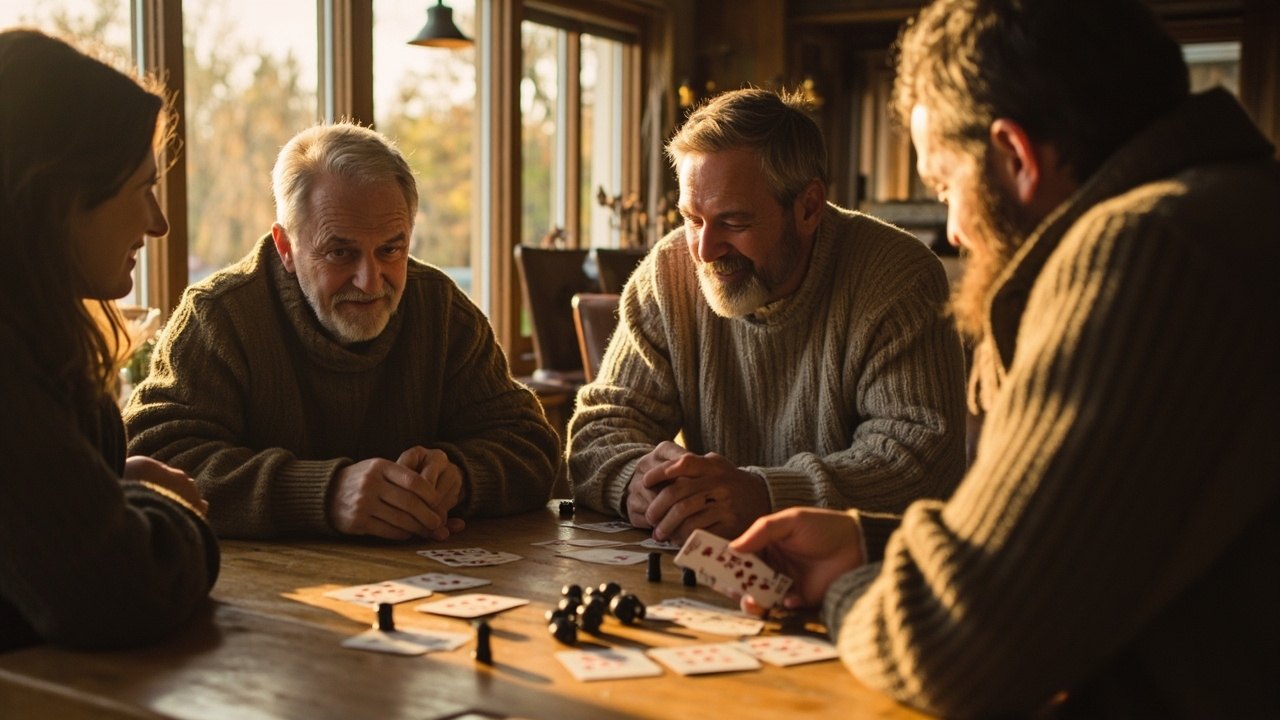
The best indoor party games for adults are easy to learn, work for mixed groups, and need little more than cards, paper, pens, or a phone. Choose one fast icebreaker, one word game, one team challenge, and one no-prep activity, then set short rounds so everyone keeps talking and laughing.
The short version
- Pick three or four games so the activity does not dominate the party.
- Give each round a clear time limit and simple scoring system.
- Use teams only when they help guests interact instead of making the group smaller.
- Save the silliest or fastest game for last, when energy is usually highest.
The best indoor party games for adults start with a simple mix
The best indoor party games for adults work best when they balance conversation, friendly competition, and short bursts of movement. Instead of planning one activity that must entertain everyone, create a small menu that offers different ways to participate.
A strong lineup includes one game for meeting people, one that requires careful thinking, one that builds team spirit, and one that needs almost no setup. This mix also makes it easier to adjust if a group arrives at different times or if some guests would rather talk than compete.
- Choose the number of rounds. For a typical gathering, three or four games are usually more satisfying than a long tournament.
- Assign a host for rules. One person should explain each game, start the timer, and resolve disputes so everyone else can join quickly.
- Keep teams flexible. Let players switch sides or make new teams after each round rather than assigning them for the entire evening.
- End on a high note. Choose a quick game with a clear winner so the final minutes feel energetic rather than awkward.
- Make sure every game can be understood without special knowledge.
- Provide paper and several pens if any round may involve writing.
- Offer a seated alternative for games that involve moving around.
What are good icebreaker games for adults?
Good icebreaker games for adults create conversation without forcing anyone to perform or disclose personal information. They should be light, inclusive, and finished quickly enough that the group does not feel trapped in an awkward introduction.
Start with a simple prompt and give everyone an equal amount of time to respond. As the group gets comfortable, you can move from individual answers to games that encourage people to learn one another’s names, interests, and preferences.
Four reliable icebreakers
- Two truths and a lie. Each guest shares three facts about themselves, two true and one false. The group asks questions, votes on the false statement, and the guest reveals the answer.
- Would you rather? Give each person two harmless choices, such as “cook at home for a week” or “eat takeout for a week.” Players choose, explain why, and then listen for someone with a different preference.
- Quick name challenge. In a circle, each person says their name and completes a prompt such as “is famous for” or “cannot stop ordering.” The next player must repeat the chain correctly.
- Same-word introductions. Ask everyone to use the same ordinary word in their introduction, such as “bright,” “coffee,” or “weekend.” The constraint breaks the usual pattern of “I work in…” and often produces memorable descriptions.
Do not make the icebreaker a test of courage, relationship history, or drinking habits. Keep the tone playful and let guests pass on any prompt. A warm host will explain that passing is allowed, which makes it more likely that quieter people will volunteer when they feel comfortable.
Which word games work best for a party?
The best word games for parties are quick to teach, easy to score, and generous enough to allow ordinary words as well as unexpected answers. They work especially well after an icebreaker because guests are already speaking and need only a little structure.
You can mix word games with a verbal game such as Twenty Questions or keep the theme consistent by asking every round for a word related to the party. The latter often creates the best conversations because players have to explain their reasoning.
Try these party word games
- Word chain. The first player says any word. Each subsequent player must begin with the last letter of the previous word. Repeat a word or take too long, and the player is out.
- Common word. Give everyone the same category, such as “things found in a kitchen.” Each player has one turn to suggest an answer and may repeat an earlier answer. The last player remaining wins.
- Password. Split the group into two teams. One player on each team gives clues while teammates identify the secret word without saying it directly.
- Six-word story. Each player adds one word to a shared story. Rotate the starting player after each round so no guest controls the entire plot.
How to keep word games moving
- Set a visible timer for answers or turns.
- Accept multiple valid words unless the group agrees on a category first.
- Avoid obscure words when the goal is fun rather than competition.
- Give the final round to a team rather than an individual when scores are close.
Write complicated rules on an index card or sheet of paper before guests arrive. A short demonstration is often more useful than a long explanation, especially when the group includes people who have never played the game before.
What team games keep a group involved?
Team games keep a group involved by giving people a shared goal, a reason to communicate, and a clear moment when the result is decided. The strongest options let friends and acquaintances contribute different strengths, including memory, creativity, movement, and observation.
Form teams of roughly equal size, but avoid making the teams permanent if that would separate people who came together. A simple method is to have players count off, choose team names, and then reshuffle before the next game.
Four options for active groups
- The Price Is Right. One player acts as the host and names imaginary items with prices. The two teams guess which is closer to the stated price without going over or under.
- Around-the-room challenge. Create a list of objects that can be spotted without leaving the room. Teams mark each item, with one point per find and a bonus for something unusual.
- Drawing relay. Players take turns adding to the same drawing, one small detail at a time. Afterward, the group guesses what it depicts and awards points for a correct answer.
- Four corners. Label the corners of a room with different categories. Read a prompt, and players move to the matching corner. The last group to move without an answer sits out the next round.
Make competition comfortable by rewarding the best team effort as well as the winning team. For example, give points for a correct answer, a clear explanation, or helping a teammate recover from a mistake. This prevents one dominant player from taking over while still keeping the result exciting.
What are the best no-prep games?
The best no-prep indoor party games for adults use ordinary conversation, gestures, or a single sheet of paper, so there is no need to buy a specialized kit or prepare complicated materials. They are ideal for spontaneous gatherings, office visits, and nights when nobody wants to set up a formal game station.
Choose no-prep games that give people a reason to talk, not merely a series of instructions to follow. A useful prompt should work with several answers so that the humor comes from the group rather than from one rehearsed joke.
Four games that need almost nothing
- Twenty Questions. One player thinks of an object and answers only “yes” or “no” to questions. The group has a set number of guesses to identify it.
- Object detective. Hide an ordinary object in the room before guests arrive. Players ask yes-or-no questions about its location, while the host tracks the clues and confirms only whether each answer is correct.
- Drawing challenge. Each player draws one simple object on a sheet of paper. Players exchange papers and try to guess what they are looking at without writing the answer.
- Story relay. Begin a story with one sentence. Each person adds a sentence and must include the final word from the previous person. Keep the rules visible so nobody is unfairly eliminated.
Use a phone only when it adds genuine value. A phone-based trivia round can work if everyone can see the questions, but paper versions are often more social because guests can argue, confer, and react to one another’s answers. If using an app, download it and create the session before the party when possible.
How should you plan for group size and time?
When planning indoor party games for adults, match the number of players, available space, and length of the gathering to the type of challenge. Large groups benefit from teams and visible prompts, while small groups often work best with conversation-based games that allow every person to speak often.
Do not promise every activity will fit. Build a main lineup and keep one short alternative ready in case a game ends early, runs long, or does not suit the group. The table below offers a practical starting point.
| Group size | Best game formats | Useful time | Simple setup |
|---|---|---|---|
| 2–4 guests | Word games, Twenty Questions, drawing | 10–15 minutes | Paper and pens |
| 5–8 guests | Icebreakers, Password, drawing relay | 15–20 minutes | Teams of two or three |
| 9–12 guests | Four corners, trivia, around-the-room challenge | 15–25 minutes | Open floor space |
| 13 or more | Multiple teams, visible prompts, brief rounds | 20–30 minutes | One host per group |
Give people a five-minute warning before the final game and keep a drink or snack break in the middle of a longer event. The best lineup is the one your group actually finishes, not the one with the most games on the list.
Common mistakes to avoid
The most common party-game mistake is choosing too many complicated options instead of preparing a few simple ones.
- Explaining too much. Long instructions make simple games feel like work. Demonstrate one example and begin.
- Eliminating people too quickly. Keep everyone involved through team points, partner turns, or occasional “play again” rounds.
- Making one guest the permanent judge. Rotate judges or let the group vote when answers are subjective.
- Forgetting spectators. Give seated guests a role, such as choosing categories, keeping score, or deciding bonuses.
- Ignoring ties and delays. Decide the tie-breaker and the round limit before the game starts, not during an argument.
- Letting technology take over. If phones are causing more distraction than laughter, switch to a paper-based activity.
Frequently asked questions
The right indoor party games for adults depend mainly on the group, the setting, and how much time you want to devote to games.
What are the best indoor party games for adults for a small group?
Word chain, Twenty Questions, and drawing challenges are especially effective for two to four guests because everyone can participate without a large team structure. Add a short icebreaker first if the guests do not know one another, then choose one more competitive game if the group enjoys that kind of play.
How many games should I plan for a party?
Plan for three or four games in most gatherings, allowing roughly 15 to 25 minutes for the activity portion. A game should end before attention begins to fade, so use time limits and have one flexible extra round available rather than filling the entire schedule.
What if guests do not know each other?
Begin with an icebreaker that permits passing and does not require personal or professional status. Speed introductions, Two Truths and a Lie, and creative name challenges create a natural starting point without forcing intimate conversation.
How can I make party games more engaging?
Use clear time limits, simple scoring, and small changes between rounds to keep the pace moving. Give playful point bonuses for teamwork, imagination, or the best explanation, and involve anyone who seems uncomfortable in a seated role.
Write your first three choices now, gather only paper and pens, and assign one host to start the evening. A thoughtful mix of indoor party games for adults will keep guests involved without requiring elaborate preparation or equipment.