Hamstring Exercises at Home for Stronger, Happier Legs
Learn hamstring exercises at home using bodyweight, towels, and bands, with clear form guidance, a weekly routine, progression tips, and safety basics.
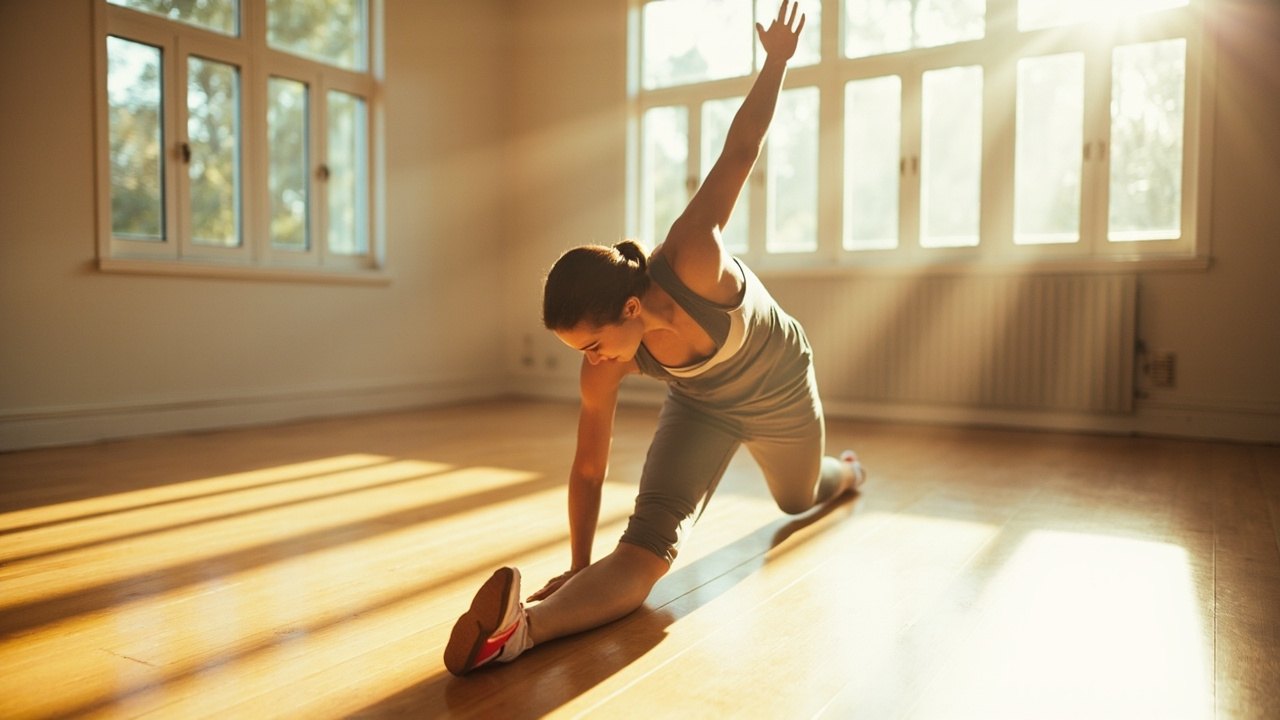
Hamstring exercises at home can be simple, effective, and adaptable: start with bodyweight movements such as the Romanian deadlift, single-leg glute bridge, standing hamstring curl, and supported stretch, then add a towel or resistance band as you get stronger. A 10–15 minute routine two or three times a week can build consistency while keeping the session manageable.
The short version
- Choose two strengthening movements and one mobility exercise for a simple home session.
- Keep your back neutral, bend your knees as needed, and stop any movement that causes sharp pain.
- Train two or three times weekly, giving your legs time to recover between sessions.
- Progress gradually by adding reps, slowing the movement, reducing support, or adding light resistance.
Which hamstring exercises at home work best?
The best hamstring exercises at home are the ones you can perform with steady form: a Romanian deadlift for the back of the thighs, a glute bridge for the hips and hamstrings, and a standing curl for knee flexion.
- Romanian deadlift: A hip hinge that trains the hamstrings while teaching you to keep your spine steady. Hold a chair or wall for balance if necessary.
- Single-leg glute bridge: A floor exercise that challenges one hamstring at a time while also requiring hip control.
- Standing hamstring curl: A supported movement that brings your heel toward your seat and directly works the knee-bending muscles.
- Supported hamstring stretch: A mobility exercise that targets the back of the thigh without using momentum. It complements strengthening but does not replace it.
What do you need for a home workout?
Most readers need very little equipment. A stable chair, a wall, and a clear exercise space are enough to begin; the best hamstring exercises at home are often the movements that use your own body weight.
A towel can help with stretching and give you something to hold during balance exercises. A long towel also works for a gentle seated stretch, but it should not be yanked or used to force a range of motion.
A resistance band adds options for hamstring curls, bridges, and supported hinges. Light resistance lets you practice the movement pattern before moving to a heavier band or household object.
| Exercise | Equipment | Best use |
|---|---|---|
| Romanian deadlift | None or light backpack | Hip hinge strength |
| Glute bridge | Mat or carpet | Hip and hamstring strength |
| Standing curl | Wall, chair, or band | Knee flexion strength |
| Seated stretch | Chair and towel | Hamstring mobility |
| Supported hinge stretch | Wall or chair | Posterior-thigh mobility |
How do you perform each exercise with good form?
Good form matters more than depth, speed, or number of reps. Move slowly enough to keep your spine controlled and your working muscles engaged throughout each repetition.
Romanian deadlift
- Stand with your feet about hip-width apart, holding a chair, wall, or light backpack.
- Soften your knees slightly, push your hips backward, and tip your torso forward as though closing a car door.
- Stop when you feel a strong stretch behind your thighs or when your hips begin to rise noticeably.
- Squeeze your glutes and hamstrings to return to standing without arching your lower back.
Single-leg glute bridge
- Lie on your back with your knees bent and your feet planted close to your seat.
- Extend one leg and keep it in line with your other knee rather than letting it drop outward.
- Press through the planted heel to lift your hips until your body forms a gentle line from knee to shoulder.
- Lower slowly, then repeat before changing legs. Keep your ribs relaxed and your jaw unclenched.
Standing hamstring curl
- Stand beside a sturdy chair or wall and hold it with one or both hands.
- Keep your torso upright and your standing leg stable as you bend one knee, bringing your heel toward your seat.
- Pause briefly, then lower the foot under control rather than letting it drop.
- If you wobble, hold the support more firmly or reduce the range of motion. Do not lean forward to complete the rep.
Supported hamstring stretch
- Place one heel a step ahead of the other, straighten the front knee, and hinge forward from the hips.
- Keep your back neutral and your hips level rather than twisting toward the stretched leg.
- Hold the position for a comfortable 20–30 seconds, switch legs, and repeat two or three times.
- For a towel-assisted seated stretch, sit with one leg extended and place the towel around its foot; hinge forward only until you feel a manageable stretch.
What does a beginner-friendly hamstring routine look like?
A beginner-friendly routine should take about 10–15 minutes and leave enough room to finish each movement with control. These hamstring exercises at home work well together because they combine hip hinging, knee bending, and mobility.
Begin with two to three minutes of easy movement, such as walking in place, hip hinges, and gentle knee bends. Then complete the following circuit for two rounds:
- Romanian deadlift: 8–10 reps
- Single-leg glute bridge: 6–8 reps per leg
- Standing hamstring curl: 8–12 reps per leg
- Supported hamstring stretch: 20–30 seconds per side
Rest briefly between exercises during the first round. On the second round, aim for smooth repetitions rather than a faster pace. If the routine feels too easy, add reps before making the exercise harder.
You can follow this pattern on two nonconsecutive days each week. On another day, choose one or two of the strengthening movements for a shorter session. Hamstrings also do work during walking, cycling, stair climbing, and everyday bending, so a short focused routine is only part of the picture.
How can I progress without hurting myself?
Progression should be gradual, specific, and easy to recover from. Change only one part of the workout at a time so you can tell what made it easier or harder.
- Add reps: Increase from 8 to 10 or 12 reps per set while keeping the same range of motion and steady form.
- Slow down: Use a two-second lowering phase and a one-second pause to make each repetition more controlled.
- Add resistance: Hold a light backpack for the deadlift or use a firmer resistance band for curls and bridges.
- Remove help: Once a movement feels stable, reduce hand support, move the hands away from the chair, or shorten the stance for a single-leg variation.
Keep a simple record of the exercise, number of reps, and how the set felt. Progress only when the final reps still resemble the first reps; if your form breaks down, the set is usually enough for that day.
Are hamstring exercises at home safe for everyone?
Yes, when you use controlled movement and adjust the exercise to your current abilities. The main safety concern is not the location; it is forcing range of motion, adding resistance too quickly, or ignoring pain.
- Warm up before strengthening and avoid jumping straight into deep, cold stretches.
- Use a stable chair or wall rather than balancing without support if your ankles feel unsteady.
- Keep the exercise challenging but manageable; you should feel the hamstrings working, not straining elsewhere.
- Avoid sharp pain, joint pain, numbness, or a sudden pull in the back of the thigh.
- Stop and reassess if a movement causes symptoms that persist after the session.
If you have a health condition, current pain, or concerns about exercising, check with a doctor or qualified professional before starting.
Common mistakes to avoid
The most common problems are easy to correct, especially with a slower tempo and a smaller range of motion.
- Rounding the lower back: Hinge from the hips and shorten the movement if you cannot keep your spine steady.
- Bending the knees too much: A soft knee is fine, but letting the knees turn into a squat changes the exercise.
- Arching during a bridge: Stop the lift before your ribs flare or your lower back compresses.
- Using momentum: Swing the leg, jerk the weight, or bounce through stretches lessens muscle control.
- Chasing soreness: Muscle effort and mild tension are normal, but soreness should not dictate the next session.
- Changing everything at once: Add reps, time, equipment, and range of motion gradually rather than all in one workout.
Frequently asked questions
Do I need weights to strengthen my hamstrings?
No. Bodyweight resistance, slow tempo, and a controlled range of motion can make a Romanian deadlift, glute bridge, or standing curl challenging. Weights or bands become useful when those movements become too easy or when you want more variety.
How often should I do hamstring exercises at home?
Two or three sessions per week is a practical starting point, with recovery time between harder sessions. Short, consistent workouts are generally more useful than one long session followed by several days off.
Can I stretch my hamstrings every day?
Gentle mobility work can fit into many daily routines, especially after walking or other movement. Avoid using daily stretching to compensate for a lack of strengthening, and stop if sharp pain or nerve symptoms appear.
Which hamstring exercises at home are good for beginners?
Start with a supported Romanian deadlift, a two-leg glute bridge, and a standing curl using a chair for balance. These exercises are easy to scale and teach useful movement patterns before you try more advanced variations.
Choose a clear space, set up your chair and any equipment, and complete one round of the recommended circuit today. Record your reps and how the exercises felt so the next session has a simple, measurable starting point.