Stretches for Glutes: 8 Easy Moves to Loosen Tight Hips
Try eight practical stretches for glutes to loosen tight hips, with step-by-step cues, hold times, timing advice, and modifications for a gentler routine.
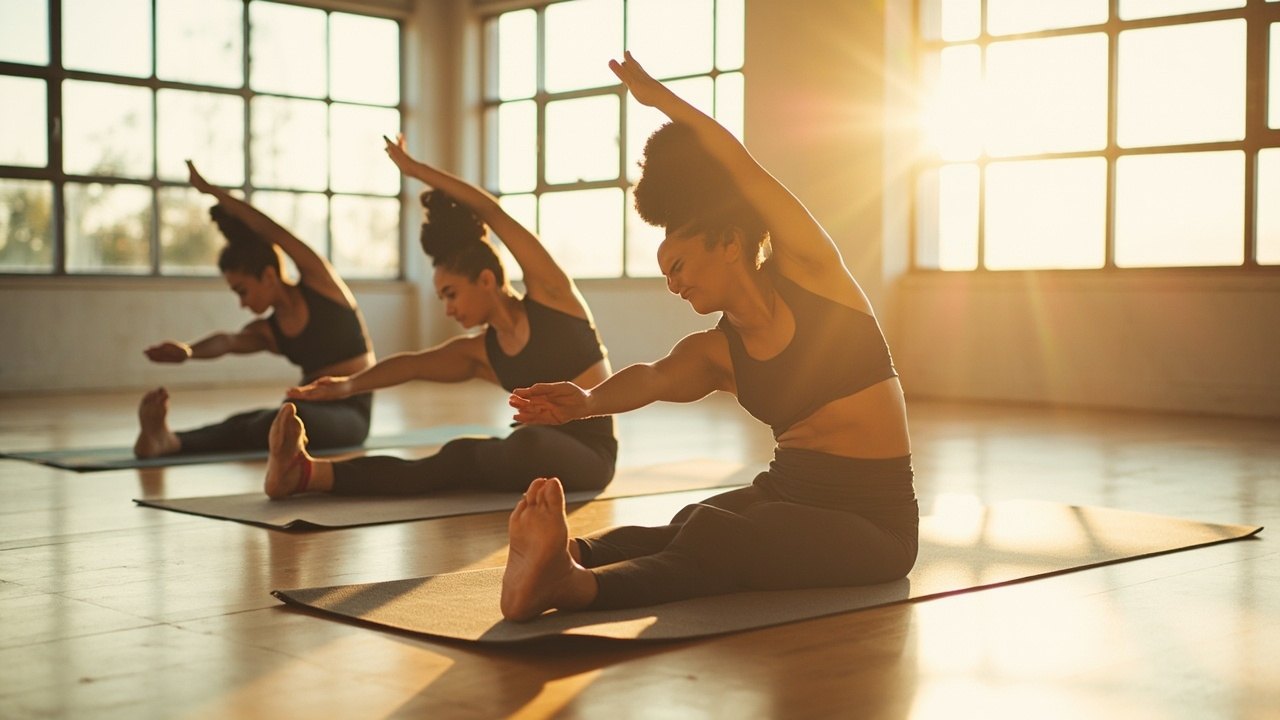
The best stretches for glutes are gentle movements that target the gluteal muscles and surrounding hip area. Try a figure-four stretch, 90/90 stretch, supine spinal twist, child’s pose variation, standing hip flexion stretch, and pigeon pose for about 20–30 seconds per side, then repeat once. Move slowly and stop if you feel pain rather than sharp discomfort.
The short version
- Hold most static glute stretches for 20–30 seconds per side.
- Complete one or two rounds, focusing on slow movement and an easy-to-moderate stretch.
- Warm up briefly with walking or gentle hip movements before holding any position.
- Use a smaller range, a wall, or a chair if a stretch feels too intense.
What are the best stretches for glutes?
The most useful options target the glutes while keeping the hips and lower back supported, so you can relax instead of fighting your balance. The eight moves below cover different positions and levels of flexibility, from a supported supine stretch to a deeper hip-opening position.
Choose a stretch based on how your body feels that day. You do not need to reach the deepest version of every position, and several stretches can be adjusted to make them easier.
| Stretch | Best For | Hold Time | Easy Modification |
|---|---|---|---|
| Figure-four | Outer hip and glute | 20–30 seconds | Keep the foot on the floor and lift only the knee |
| 90/90 | Rotational hip mobility | 20–30 seconds | Sit against a wall for support |
| Supine twist | Lower back and hips | 20–30 seconds | Keep both shoulders relaxed on the floor |
| Pigeon | Outer hip and glute | 20–30 seconds | Place a folded towel under the front hip |
How long should you hold a glute stretch?
Most static stretches feel most manageable when held for 20–30 seconds on each side, followed by one or two additional rounds if you want more time in the position.
There is no need to count every movement down to the second. The goal is to reach a position where you feel a gentle stretch, not pain or numbness. Breathe normally throughout the hold and avoid bouncing into or out of the stretch.
Less time can work well for beginners or particularly tight areas. Hold a stretch for 10–15 seconds, release, and repeat several times. If you can comfortably relax, a 30–45 second hold may be appropriate, but longer is not automatically better.
What if the stretch feels intense?
Adjust your position before holding. Move the hips farther away from the target area, raise the supporting leg with a cushion, or use your hands for balance. A smaller range that you can maintain without straining is more useful than a deep position that causes discomfort.
What are the best eight stretches for glutes?
These eight stretches for glutes can be performed barefoot or in comfortable clothing, and most require no equipment beyond a mat, wall, chair, or folded towel.
1. Supine figure-four stretch
This is an accessible starting point because your back and shoulders stay supported by the floor.
- Lie on your back with both knees bent and your feet resting on the floor.
- Cross one ankle over the opposite thigh, then keep that foot flexible rather than pointing it.
- Reach through the supporting leg and draw the legs toward your chest until you feel a mild stretch in the crossed-side glute and outer hip.
- Keep your head and shoulders relaxed, hold for 20–30 seconds, then switch sides.
If the position pulls on your knee, keep the foot on the floor and rest the ankle across the thigh before gently drawing the supporting leg inward.
2. Seated 90/90 stretch
The 90/90 position challenges both hips to rotate, making it useful when the hips feel stiff in ordinary sitting.
- Sit on the floor with both knees bent about 90 degrees and your lower legs extending in opposite directions.
- Place your hands behind you for support and lengthen your spine without leaning backward.
- Turn your torso gently toward one bent knee while keeping both sit bones grounded.
- Hold for 20–30 seconds, return to center, and repeat on the other side.
Sit close to a wall if you have trouble staying upright. Keep the movement focused on a small, comfortable turn.
3. Supine spinal twist
A supine twist offers a gentler way to create space across the hips and lower back while remaining fully supported.
- Lie on your back, bend your knees, and place your feet about hip-width apart.
- Open both arms out to the sides with your palms facing upward.
- Slowly lower both knees toward one side while keeping your shoulders relaxed against the floor.
- Hold for 20–30 seconds, return to center, and repeat on the opposite side.
If your lower back lifts, place a pillow beneath the knees or move the legs closer to your body before twisting.
4. Child’s pose with the hips shifted
A side-to-side variation of child’s pose gives the glutes a mild stretch without requiring a deep hip opener.
- Begin on your hands and knees with your wrists under your shoulders and knees under your hips.
- Bring your big toes together, separate your knees slightly, and sit your hips toward one heel.
- Keep your hands on the floor and walk your fingers slowly toward the opposite side.
- Hold for 20–30 seconds, return to center, and shift toward the other heel.
Place a cushion between your calves and hips if the knees or lower back feel uncomfortable. Keep the stretch centered in the hips rather than arching the lower back.
5. Standing hip flexion stretch
This standing option is convenient for the beginning or end of a workout and does not require getting down to the floor.
- Stand near a wall or sturdy chair and take a long step forward with one foot.
- Keep both feet pointing forward and slightly tuck your pelvis before bending the front knee.
- Reach the same-side hand back to hold the chair or wall, or keep your hands on your hips.
- Hold for 20–30 seconds, step back, and repeat with the other leg.
Shorten your stance if the front knee strains. The movement should lengthen the front of the hip without forcing the rear knee deeply toward the floor.
6. Pigeon pose
Pigeon pose directly opens the outer hip, but using props can help you settle into it without overloading the front hip or knee.
- Begin on hands and knees, bring one knee forward, and place that shin across the front of your mat.
- Extend the opposite leg straight behind you and square your hips as much as comfortable.
- Keep your hands on the floor, bend forward, or lower your torso onto a cushion.
- Hold for 20–30 seconds, rise slowly, and repeat on the other side.
Place a folded towel beneath the front hip to reduce the height of the position. If the knee is uncomfortable, try a reclined figure-four instead.
7. Frog stretch
The frog position provides a broad, supported hip stretch for readers who prefer staying close to the floor.
- Kneel on a mat with your knees wider than your hips and your feet pointing outward.
- Keep your hands on the floor and slowly send your hips backward.
- Allow your inner hips and glutes to open without pushing your lower back into an arch.
- Hold for 20–30 seconds, then repeat once before changing position.
Place a cushion beneath your hips if you feel pressure in your knees. Bend your elbows and rest your forearms on the floor for extra support.
8. Seated glute stretch with one leg crossed
This seated version is practical at a desk and offers a simple option when lying down is not convenient.
- Sit tall in a sturdy chair with both feet flat on the floor.
- Place one ankle across the opposite knee, keeping the foot flexed.
- Sit back slightly and lean forward from the hips until you feel a mild stretch in the glute of the crossed leg.
- Hold for 20–30 seconds, return upright, and switch sides.
Keep your spine long rather than rounding deeply. If the raised foot is difficult to position, rest the heel on the floor and make the adjustment with your arms.
When should you stretch your glutes?
The best time is when your body is warm and you can give the stretch your full attention, which may be after a light walk, warm-up, or workout.
Brief movement before exercise can make positions feel more comfortable, but prolonged static stretching is not necessary before every activity. If you are about to perform squats, lunges, or running, begin with controlled, unloaded repetitions and save longer holds for the end of your session or another part of the day.
Many people find a short routine helpful in the evening, after sitting for a long time, or when they are preparing for a more mobility-focused session. Consistency matters more than a perfect schedule.
- After prolonged sitting: try two or three of the gentler floor-based stretches.
- Before mobility work: begin with small, easy movements and build gradually.
- After exercise: use slow positions and avoid forcing the range of motion.
- Between longer tasks: a 30–60 second posture change can help you feel more comfortable.
How do you stretch your glutes without worsening pain?
You can stretch gently by moving into a position gradually, keeping the target area relaxed, and staying within a range that allows normal breathing.
Start with the least demanding version of a stretch. For example, keep your foot down in the figure-four stretch, shorten your stance in the standing lunge, or support your hips in frog pose. As your position becomes more comfortable, you can explore a slightly deeper range.
A useful stretching sensation is broad, mild, and located around the hip or glute. Pinching, shooting pain, numbness, tingling, or a feeling that worsens quickly is a sign to stop. Do not use stretching to work through an injury or persistent pain.
Check with a doctor or qualified professional if you have a health condition, ongoing pain, recent surgery, or concerns about whether a movement is appropriate for you. A physical therapist or qualified mobility coach may also help you modify the routine.
Can you stretch your glutes without yoga or special equipment?
Yes. A floor-based figure-four stretch, a standing lunge near a chair, and a seated ankle-crossed stretch are enough for a simple home routine.
Yoga blocks, cushions, and towels can make certain positions more comfortable, but they are optional. The wall-supported 90/90 stretch is another equipment-light choice, while the supine twist requires only enough floor space to lie down with your arms extended.
Choose one or two movements you can perform comfortably and repeat them rather than rushing through a long sequence. If your schedule is limited, a two-minute routine is still practical when the positions and holds are controlled.
Common mistakes to avoid
The most common mistakes are rushing, bouncing, holding too long, and trying to force a position that your body cannot comfortably maintain.
- Bouncing: Move into and out of the stretch slowly rather than using repeated pulses.
- Forcing depth: Reduce the range of motion when you lose control of your posture or breathing.
- Straining the knee: Keep the knee aligned with the direction of the foot and use smaller angles when needed.
- Arching the lower back: Keep your spine neutral, especially in child’s pose, pigeon, and frog.
- Holding one side longer: Give each side similar time so the routine stays balanced.
- Ignoring warning signs: Stop for sharp pain, numbness, tingling, or symptoms that worsen during the stretch.
- Stretching through injury: Persistent pain deserves professional guidance rather than repeated aggressive stretching.
Frequently asked questions
These answers cover the timing, intensity, and technique questions that come up most often when people practice stretches for glutes.
How often should I do stretches for glutes?
You can practice these stretches daily or several times a week, depending on your comfort and schedule. Two or three rounds of two to four moves is enough for most people; consistency and controlled technique matter more than completing every position.
How long should a glute stretch feel?
A comfortable static stretch may feel mild to moderate, usually somewhere between 2 and 5 on a personal scale of 10. It should not feel sharp, electric, numb, or painful, and you should be able to breathe normally throughout the hold.
Should I stretch before or after a workout?
Light mobility before exercise can help you move through positions with more control, while longer holds often feel easier after your body is warm. The right timing depends on your activity and preferences, so choose what feels comfortable and leaves enough energy for the workout itself.
Is stretching better than strengthening for tight glutes?
Stretching can help you move through a comfortable range, while strengthening helps your muscles support movement and posture. If an area consistently feels tight or painful, a balanced program that includes both gradual mobility and appropriate strengthening may be more useful than stretching alone.
Start with two or three of the gentler moves, hold each side for 20–30 seconds, and adjust before adding more. If you want a simple starting point, try the figure-four stretch, supine twist, and seated 90/90 stretch for one full round today.