How to Cook Bacon in the Oven: Crispy, Even Results
Learn how to cook bacon in the oven with the right pan, temperature, timing, foil or parchment, crispness tips, grease disposal, and storage.
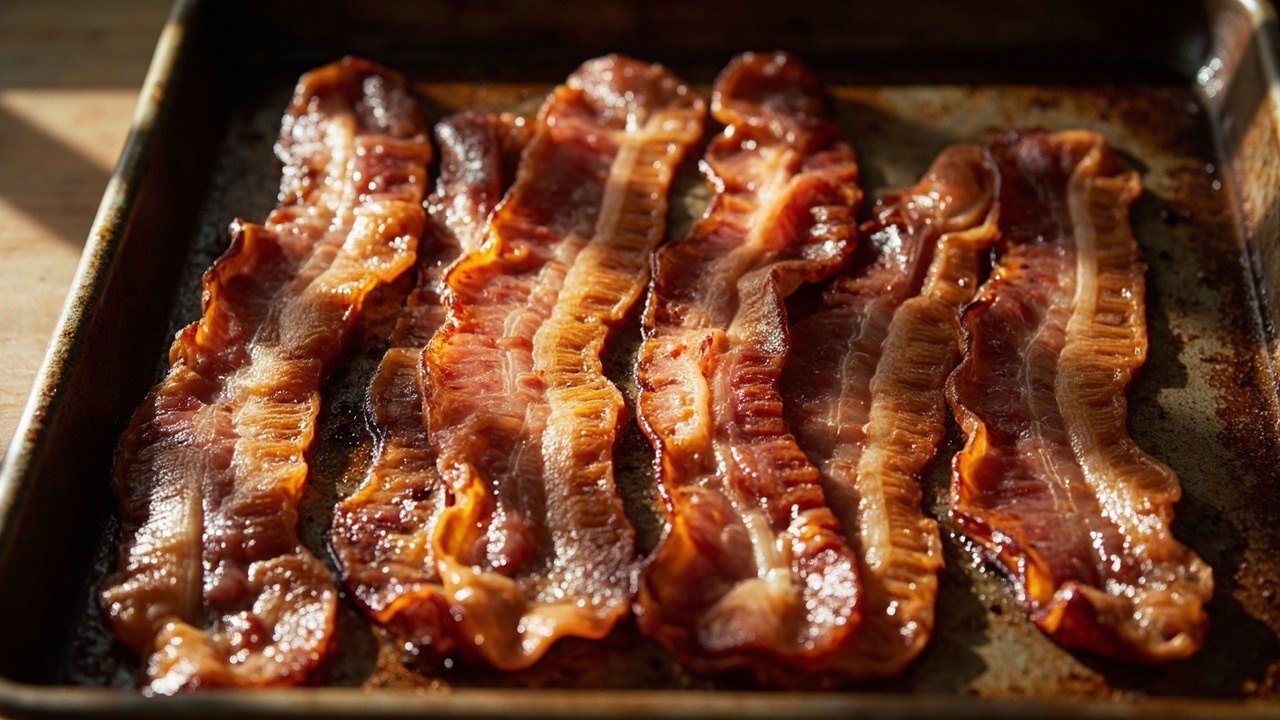
If you’re wondering how to cook bacon in the oven, arrange it on a lined sheet pan, cook at 400–450°F until browned and crisp, then drain and refrigerate the leftovers promptly. Thicker slices need more time than standard strips.
The short version
- Heat a conventional oven to 425°F and arrange the bacon in a single layer with space between the slices.
- Line a rimmed sheet pan with foil or parchment, or place a wire rack over the pan for better airflow.
- Check after 15 minutes; standard bacon usually needs 15–22 minutes, while thick-cut bacon may need 20–30 minutes.
- Drain the cooked bacon, cool it safely, and refrigerate it within two hours in a covered container.
What temperature and time should you use for oven bacon?
For evenly cooked, crisp bacon, use 400–450°F and start checking at 15 minutes; the best setting depends on the slice thickness, how close the pan sits to the heating element, and whether you want tender edges or well-browned edges.
At 425°F, standard-cut bacon generally takes 15–22 minutes. Thick slices may need 20–30 minutes. A lower temperature gives the fat more time to render, while a higher temperature browns the surface quickly. Because ovens and pans vary, treat the times below as a starting point rather than a guarantee.
| Oven temperature | Standard-cut bacon | Thick-cut bacon |
|---|---|---|
| 400°F | 18–24 minutes | 24–32 minutes |
| 425°F | 15–22 minutes | 20–30 minutes |
| 450°F | 12–18 minutes | 18–26 minutes |
Choose the color and texture you prefer rather than waiting for a specific number of minutes. The bacon is ready when the fat has rendered, the edges are browned, and the strips bend easily but no longer look soft or floppy.
For raw pork products, the USDA recommends a minimum internal temperature of 145°F followed by a three-minute rest. Many bacon recipes cook the meat beyond that point to develop better flavor and texture, so follow the recipe’s directions when they differ.
How to cook bacon in the oven: sheet pan or rack?
A rimmed sheet pan is the easiest choice, while a wire rack set over the pan gives the bacon more airflow and can produce crispier edges.
For the sheet-pan method, line the pan with foil or parchment so the rendered fat does not directly contact the metal. Arrange the bacon in a single layer, without overlapping the pieces. Touching slices can steam one another, especially near the center of the pan.
For the rack method, spray or lightly oil the rack if it looks prone to sticking, then position it over a rimmed sheet pan. The rack catches the drippings and keeps the underside of the bacon exposed to hot air. It also works well for thick-cut pieces that need more browning.
There is no need to buy a special bacon tray. A cooling rack, a roasting rack, or a sturdy wire rack placed over an oven-safe sheet pan will work. Make sure the rack sits securely so it cannot slide and touch the heating element.
Should you use foil or parchment paper?
Aluminum foil is the most reliable liner because it handles high heat, contains rendered grease, and makes cleanup simple; parchment paper also works at moderate temperatures and prevents the bacon from sticking to the pan.
Fold the foil slightly up the long sides of the pan so it forms a shallow tray for hot grease. If using parchment, place it flat on the pan and follow the manufacturer’s temperature guidance, especially when raising the oven to 450°F.
Do not use wax paper in a hot oven. It can soften, smoke, or transfer wax to the food. Parchment is useful for regular bacon, but a folded piece of foil is a better choice when you want especially crisp edges at a high temperature.
How do you cook thick-cut bacon?
Give thick-cut bacon extra time and more room: cook it at 425–450°F for roughly 20–30 minutes, depending on its size and the result you want.
Begin at 425°F for the most even cooking. Put the slices on foil or a rack, leave a little space around each piece, and check at 20 minutes. If the fat still looks opaque or the bacon remains stiff, give it another five to ten minutes.
For thicker pieces, rotating the pan halfway through can help because ovens often brown one side more quickly. Keep the slices in a single layer and resist stacking them. If bacon is smoked and already deeply colored, it may finish before pale or standard-cut bacon does.
If you are adapting a recipe for raw thick bacon, use the USDA minimum internal temperature of 145°F with a three-minute rest as the food-safety floor. Many people continue cooking until the strips are firm and browned, but heavily rendered slices should not be left sitting over a hot pan once they reach your preferred texture.
How can you make oven bacon extra crispy?
For crisp bacon, use a rack, space the slices apart, and leave them uncovered near the end of cooking so hot air can reach the surface.
Start with dry bacon and a clean pan. Added oil is usually unnecessary because the bacon releases its own fat as it cooks. If the slices are very curly or stiff, you can gently straighten them before placing them in the oven.
If you prefer softer bacon, cover the pan loosely with foil for the first part of the cooking time, then remove it so the surface can dry and brown. Leaving foil on for the entire cooking cycle can trap steam and keep the bacon from becoming crisp.
For a final browning boost, switch the oven to broil for one or two minutes and watch the bacon continuously. Broiling varies a lot by oven, so move the pan farther from the heat if the top browns before the fat has rendered.
How should you dispose of bacon grease and store the leftovers?
Let the cooked bacon cool briefly on the pan, lift it onto a plate or rack, and scrape the remaining grease into a disposable foil container before it cools into a solid mess.
Do not pour bacon grease down the sink; it can solidify inside pipes and cause drainage problems. While the grease is still warm, collect it in a foil pouch or an empty can, let it cool, and place it in the trash. Keep the container away from children and animals, and clean the pan with hot, soapy water once it is cool enough to handle.
For storage, place the bacon in an airtight container lined with a paper towel. Refrigerate cooked food within two hours, and use refrigerated leftovers within three to four days. The paper towel helps absorb extra grease, but check it every day or two and replace it if it becomes saturated.
You can also freeze bacon in a freezer-safe bag or container. Separate portions with parchment or wax paper so they do not freeze into one solid block. To reheat, place the bacon on a rack or lightly oiled pan in a 350°F oven for about 5–10 minutes, watching it closely because thin strips can crisp and brown quickly.
Common mistakes to avoid
- Crowding the pan: Overlapping slices steam instead of browning, so cook in batches if necessary.
- Using a non-rimmed pan: Rendered fat can spread toward the oven walls, and parchment may curl without support.
- Setting the timer and walking away: Bacon can burn quickly under the broiler or near the oven’s heating element.
- Cooking at excessive heat: Very high temperatures may darken the surface before the fat renders underneath.
- Wrapping bacon in foil for the whole bake: Trapped moisture leaves the pieces soft rather than crisp.
- Pouring grease down the drain: Collect and solidify it before placing it in the trash.
- Leaving cooked bacon at room temperature: Refrigerate it within two hours, including when the weather is hot.
Frequently asked questions
How long does it take to cook bacon in the oven?
Standard-cut bacon usually takes 15–22 minutes at 425°F, while thick-cut bacon may need 20–30 minutes. Check early and remove the bacon when the fat has rendered and the edges reach the browning level you like.
Do I need to preheat the oven for how to cook bacon in the oven?
Yes, preheat the oven to the selected temperature so the pan heats evenly and the bacon starts cooking immediately. Allow about 10–15 minutes for a conventional oven to reach its set temperature.
Can I cook frozen bacon in the oven?
You can, but thaw it first if you want the slices to cook evenly and stay flat. Place frozen bacon on a lined pan and allow extra cooking time, checking frequently, or thaw individual strips in the refrigerator for better control.
Should I cover bacon with foil while it cooks?
Cover it loosely with foil for softer bacon, or leave it uncovered for crisper pieces. For the best crispness, remove any foil for the final few minutes and keep the slices spaced apart on a rack or lined pan.
Choose your temperature, line the pan, arrange the bacon in one layer, and begin checking at 15 minutes. You’ll know it is done by its color, rendered fat, and firm-but-flexible texture—not by the clock alone.