How to Declutter a Small Apartment, Room by Room
Learn how to declutter a small apartment with a practical room-by-room plan, clear decision rules, smarter storage, and easy maintenance habits.
To learn how to declutter a small apartment, start by sorting belongings into keep, donate, sell, and discard groups, then work from the entryway through each room. Use vertical storage, clear surfaces, and realistic limits to create a calmer home you can maintain.
The short version
- Sort possessions by usefulness, not guilt, and remove anything you have not used or needed recently.
- Keep only daily-use items within easy reach; store seasonal and occasional items elsewhere.
- Use shelves, hooks, drawers, and closed bins to make the most of walls and lower furniture.
- Reset one area each week and spend two minutes tidying before you stop using the room.
How to declutter a small apartment without feeling overwhelmed
Begin with one small zone rather than the entire apartment; you will make faster decisions and build momentum. The goal is not to own less for its own sake. It is to make daily life easier by keeping useful things visible, accessible, and easy to put away.
- Choose a starting point. Try the entryway, countertop, or one drawer. Set a timer if unlimited decision-making feels paralyzing.
- Create four sorting groups. Use labels for keep, donate, sell, and discard. Add a fifth “decide later” box, but give it a deadline.
- Make quick decisions. Keep an item if you use it regularly, need it for a known obligation, or genuinely enjoy it. If none of those apply, let it go.
- Plan the destination. Decide where donated goods will go, where sale items will be listed, and which recycling or trash rules apply locally.
- Clean the empty space. Dust shelves, wipe surfaces, and return only the items that earn a place.
Use a simple decision rule
Ask: “If this item were not here, would I buy or replace it?” A yes usually means the item has a practical purpose. A no suggests that its presence is based on possibility rather than use. For sentimental objects, keep a small number of meaningful pieces instead of every reminder.
Measure before buying organizers, too. A bin that looks useful but blocks a drawer or creates a new stack on the floor has not solved the problem. Test storage solutions with the objects you already own, and only purchase containers that fit both the item and its intended location.
What should you declutter first?
Start where visible clutter creates the biggest daily friction, especially the entryway, living area, kitchen counters, bathroom sink, and bed surface. These places affect how you enter your home, use your rooms, and find what you need.
Living room or main sitting area
Remove anything that occupies a seat, floor area, or table without earning its space. Group remote controls and chargers in one small tray, and give coasters or frequently used items a dedicated home. Move occasional décor to a shelf or closed bin so the room can return to its everyday arrangement.
Bedroom
Clear the floor, bedside tables, and the top of a dresser before sorting deeper. Keep only what you wear or use near bedtime on the table. For under-bed storage, use shallow containers and label them so you can retrieve one item without pulling out everything.
Bathroom
Discard expired products and remove containers that have become mostly empty. Store backups where they are reachable but visually quiet. If every product needs daily access, the room needs fewer choices or better organization, not another crowded shelf.
How can you make a small entryway work harder?
A small entryway works best when it contains only what you need on the way in or out, plus a place for the items you carry regularly.
- Place keys, mail, and wallet in one shallow bowl or wall-mounted ledge.
- Use a narrow bench or folding seat for shoes, with a lower shelf for occasional pairs.
- Add hooks for hats, bags, and light jackets, spacing them far enough apart to prevent crowding.
- Keep a small basket for items that should leave with you, such as a reusable bag or dog leash.
- Mount a slim mirror or narrow shelf above the floor, but leave enough clearance for coats and doors.
Remove anything that has migrated into the entryway without a job. A stack of miscellaneous paperwork, old umbrellas, or abandoned packages quickly reduces usable space. Review it weekly and use an “out tonight” basket for things that repeatedly need to leave.
How do you declutter a small kitchen?
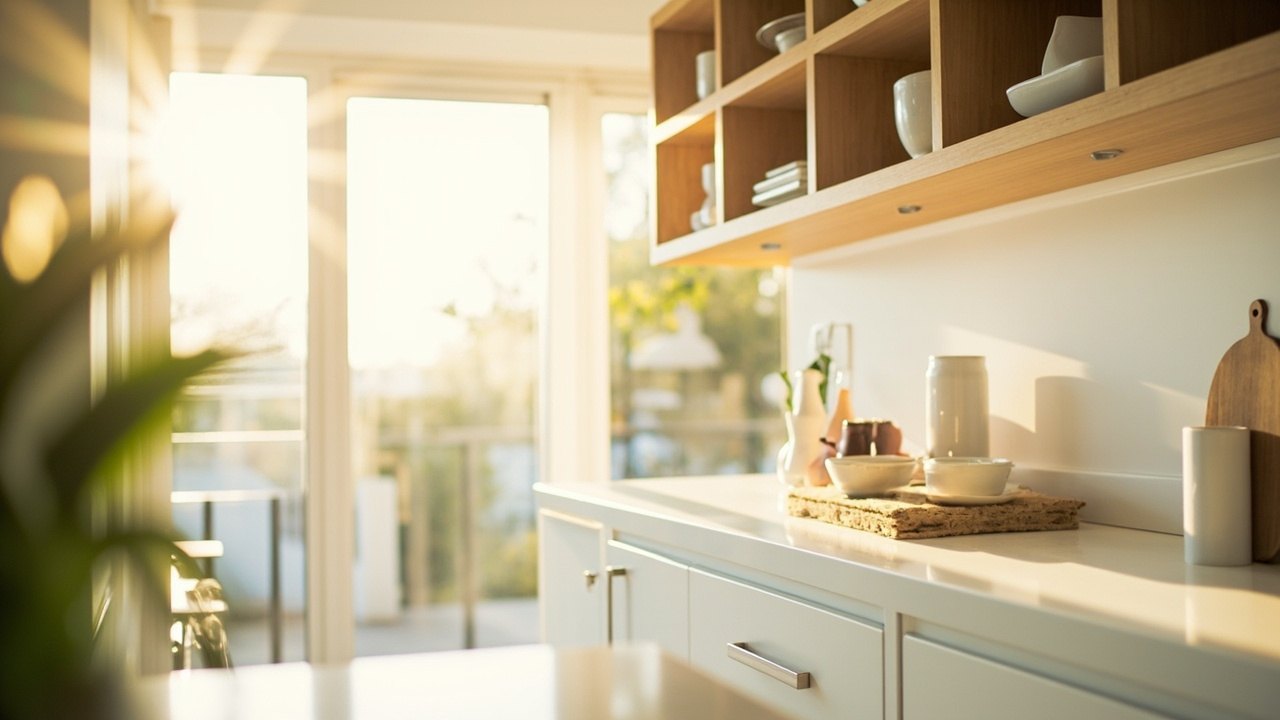
Declutter a small kitchen by keeping only everyday tools visible, grouping duplicates, and moving supplies into containers that fit the available cabinets and drawers.
- Empty and wipe the refrigerator. Check labels, dates, and freezer contents. Discard food that is spoiled or unsafe; follow local food-safety guidance for questionable items.
- Sort cabinets by use. Put daily dishes and cooking tools in the most accessible cabinets. Store seasonal cookware and serving pieces higher up or elsewhere.
- Count duplicates. Keep the best version of tools you use often. Before discarding duplicates, give them away to someone who needs them.
- Contain small items. Use drawer dividers for flat utensils and stackable bins for lids, wraps, and pantry goods.
- Clear one counter zone. Reserve a section for the appliances and ingredients you use every day; move appliances you rarely use to a cabinet or appliance garage.
- Match pantry items to meals. Keep a visible “use first” area for open packages and ingredients nearing use.
Do not hide clutter inside oversized containers. If a bin cannot be opened without emptying another bin, the system will fail. Choose clear or easily labeled containers, and keep heavy items low, frequently used items near the front, and seldom-used items on higher shelves.
How do you organize a small closet?
Organize a small closet by creating categories, setting a limit for each category, and arranging items from most to least frequently used.
- Give every category one zone, such as tops, pants, jackets, shoes, or accessories.
- Use matching hangers within a category so the rail reads as one clean section.
- Turn shelf space into vertical capacity with shelf risers, stackable boxes, or narrow hanging organizers.
- Use the closet rod for clothes and the back of the door for soft bags, hats, or an over-door organizer.
- Keep shoes paired and easy to see; use boxes only when the footwear is not needed every day.
- Place a hamper near the closet if possible, but do not let clean or dirty clothing spill into the aisle.
For a closet that remains crowded, take everything out before deciding on a new system. Many “organizing” problems are actually excess problems. Once items are sorted, arrange a few representative pieces and photograph the result; the picture can help you rebuild quickly later.
Where should you store things vertically?
Store lightweight and occasional-use items vertically so they use wall space instead of valuable floor and counter area.
| Item | Useful vertical option | Best location | What to check |
|---|---|---|---|
| Books | Wall-mounted shelves | Living room or office | Weight capacity and secure mounting |
| Small appliances | Shelf risers | Upper kitchen cabinet | Easy lifting and heat clearance |
| Towels | Hooks or narrow shelves | Bathroom or kitchen | Dryness and accessibility |
| Coats and bags | Wall hooks | Entryway or bedroom | Door clearance and spacing |
| Office supplies | Desktop organizers | Work surface | Whether every item is used often |
Install wall-mounted pieces into suitable studs or use anchors appropriate for the wall material. Keep tall or heavy items close to the floor, avoid overloading shelves, and leave breathing room around appliances. Vertical storage should increase capacity, not create an unstable tower of bins.
How do you keep a small apartment tidy?
Keep a small apartment tidy by reducing daily friction, assigning every item a home, and making cleanup brief enough to repeat.
- Use a two-minute reset. Before sitting down or leaving a room, return objects to their designated places.
- Follow one-in, one-out. When you bring in a new household item, remove an obsolete one.
- Plan for laundry. Keep a hamper in each main living area only if it can remain contained; otherwise use a smaller removable basket.
- Limit open storage. Closed bins reduce visual noise, but label them so you do not create storage you cannot access.
- Schedule a weekly review. Spend fifteen minutes checking counters, floors, and the entryway.
- Adjust seasonal needs. Rotate decorations and clothing instead of storing everything at once.
To maintain the progress, the best time to declutter a small apartment is not a marathon cleaning day but a short weekly review. Put donation items near the door, list sale items promptly, and empty the discard container before it becomes another storage zone.
Common mistakes to avoid
- Buying organizers before sorting. Containers cannot fix excess; they can merely give clutter a new location.
- Keeping duplicate items “just in case.” Replace duplicates with one complete, reliable version.
- Using every inch of available space. Leave open space so items can be found and returned easily.
- Making a system too complicated. If an arrangement requires special instructions, simplify it.
- Decluttering without cleaning. Dirty or broken items may be discarded, but clean the empty area so you can judge the result accurately.
- Ignoring the amount of time you actually have. Choose a maintenance routine you can sustain on ordinary weekdays.
Frequently asked questions
How long does it take to declutter a small apartment?
A small apartment can be decluttered in several focused sessions rather than one long day. Start with one room or zone and work for 20 to 30 minutes at a time. Sorting may take longer than the cleanup itself, so make decisions steadily instead of postponing the project.
What do you need to declutter a small apartment?
You need sorting containers, trash bags or a discard box, labels, cleaning supplies, and a place to record items you intend to donate or sell. Boxes or bins are useful only after you know what belongs in them. Keep your phone nearby for listings or pickup appointments, but avoid researching prices during the first pass.
Where should I start if I am renting?
Begin with your own belongings and make no permanent-looking changes until you have checked your lease and building rules. Use freestanding hooks, tension rods, and removable organizers where possible. Photograph the original condition of the room before moving out and remove everything you brought in.
How do I keep a small apartment from becoming cluttered again?
Give every regular item a home and remove duplicates or rarely used replacements when you acquire something new. A weekly reset prevents small piles from becoming large ones. If an item repeatedly has no home, either buy a suitable place for it or choose to stop keeping it.
Choose the room you use most this week and give it 30 minutes today. Sort one surface completely, record the next zone, and repeat until your apartment is easier to move through and maintain.