Quad Exercises at Home: Build Strong Legs Without a Gym
Quad exercises at home can strengthen your thighs with squats, lunges, step-ups, and wall sits. Get safe form, a simple routine, and ways to progress.
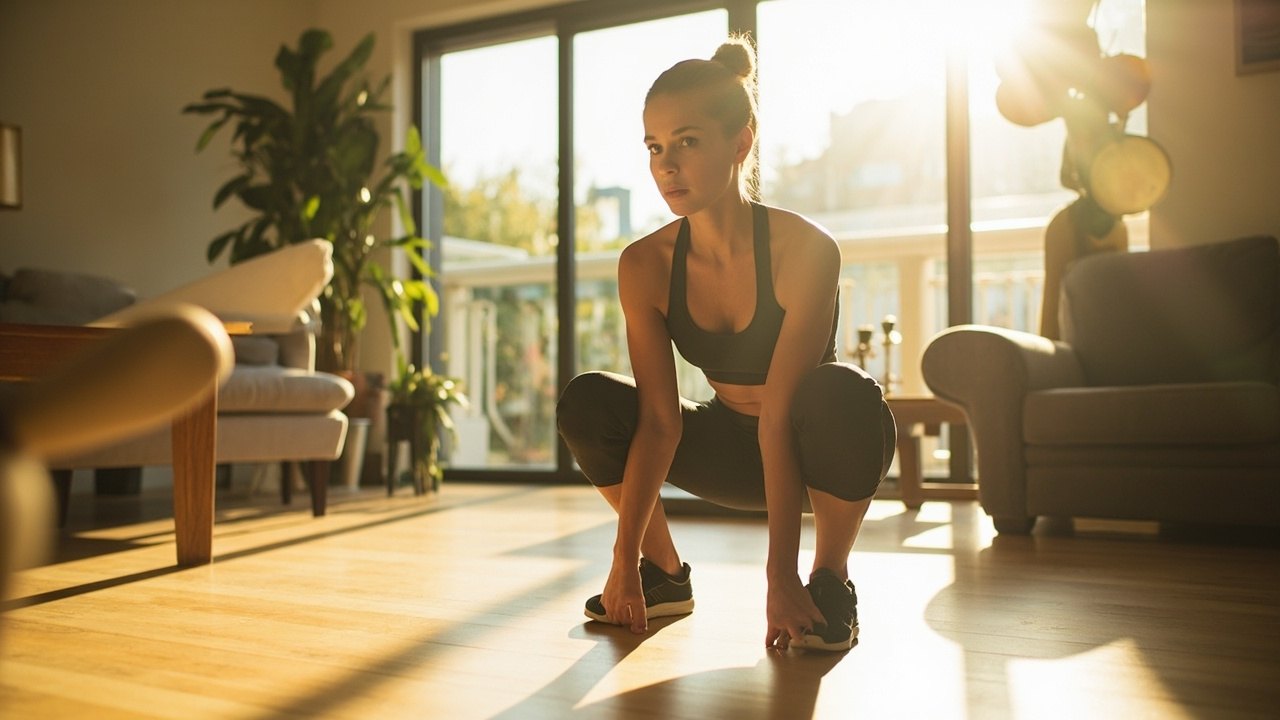
The best quad exercises at home are squats, lunges, step-ups, and wall sits because they train the front of the thighs with little or no equipment. Start with bodyweight, focus on controlled form, and gradually add reps, resistance, or more challenging variations as your strength improves.
The short version
- Choose exercises that make your thighs work without causing pain.
- Begin with two sets of 8 to 12 controlled repetitions, or 10 to 20 seconds for wall sits.
- Keep your knees aligned with your toes and your weight balanced through both feet.
- Progress by adding reps first, then resistance, range of motion, or balance challenges.
What are the best quad exercises at home?
The most useful home exercises for your quadriceps are squats, reverse lunges, forward lunges, step-ups, and wall sits. Each one places a different demand on the muscles while remaining practical in a small space.
You do not need weights, a membership, or a special mat to get a worthwhile workout. A sturdy chair can support a step-up, a wall can support a wall sit, and your own body weight provides enough resistance for beginners and many experienced exercisers.
- Squats are a good foundation because they are easy to adjust and train the thighs in a basic bending-and-standing pattern.
- Lunges challenge each leg individually and help you practice balance and control.
- Step-ups add a pressing action while using a step or stair.
- Wall sits provide a steady isometric hold that can feel challenging even without any equipment.
- Split squats and sissy squats are more advanced options for later in your routine.
How to choose the right exercise
Choose movements you can perform comfortably and repeat with consistent form. If you are new to exercise, start with squats using a light support, reverse lunges with a hand on a chair, and short wall sits.
Training should feel like work, but it should not cause sharp pain, dizziness, or loss of control. If you have a health condition, ongoing pain, or concerns about exercising, check with a doctor or qualified professional before changing your activity level.
How should you do squats and lunges with good form?
Good form comes from moving smoothly, keeping your knees in line with your toes, and controlling your body throughout each repetition. You can use a wall, chair, or countertop for light balance support when you need it.
Bodyweight squat
- Stand with your feet about hip-width apart and your toes turned slightly outward.
- Take a small breath, brace your abdominal muscles gently, and send your hips back as if you are reaching for a chair.
- Keep your chest lifted and your weight distributed across both feet.
- Bend your knees until your thighs are roughly parallel to the floor, or use a shallower range if that feels better.
- Press through your whole foot to stand, keeping your knees aligned with your toes.
Your heels may rise slightly if your calves are tight, but avoid letting your knees collapse inward. You can also place your hands on a chair in front of you for support while maintaining a comfortable position.
Reverse lunge
- Stand upright with your feet close together and hold a chair nearby if needed.
- Step one foot backward and lower your body by bending both knees.
- Lower until your back knee comes close to the floor without striking it.
- Keep your front heel planted and your torso tall.
- Push through your front foot to return to standing, then repeat with the other leg.
Take shorter steps if your balance is difficult. Longer steps generally create more work for the front thigh, while a more upright torso can make the movement easier to control.
Which squat variations can you do without equipment?
Several squat variations let you change the challenge without buying anything. The best choice depends on whether you need more support, a larger range of motion, or a greater strength demand.
Supported squat
Hold a chair or countertop with both hands and perform the squat while keeping your hands light on the support. The support should help you balance, not pull you upward. As you improve, reduce the amount of hand pressure.
Sumo squat
Stand with your feet wider than your hips and turn your toes out slightly. Sit your hips back and down while keeping your chest lifted. This position emphasizes the inner thighs and glutes as well as the quadriceps, making it a useful alternative to a standard squat.
Split squat
Place one foot forward and the other behind you, then lower yourself by bending both knees. A staggered stance creates more demand on each leg than a regular squat. Keep the front foot planted and avoid placing your back knee directly under your body.
Sissy squat
Stand with your feet together, bend your knees, and lower your hips while keeping your heels on the floor. You may need to hold a stable surface for balance. This is an advanced exercise, so use a smaller range of motion until you can control the position comfortably.
How do lunges and step-ups strengthen your quads?
Lunges and step-ups strengthen the quadriceps by asking you to bend and extend the knees while supporting your body on one leg. They also challenge balance, so keep the movement steady rather than rushing through each repetition.
Forward lunge
- Stand with your feet hip-width apart and your hands on your hips or at your sides.
- Step one foot forward into a comfortable stride.
- Lower your rear knee toward the floor while keeping your torso upright.
- Push through the front foot to return to the starting position.
- Complete all repetitions on one side before switching legs.
Forward lunges are useful for beginners who feel more stable facing forward. Reverse lunges are often easier to balance, while longer strides can increase the stretch and work through the front of the thigh.
Low step-up
- Find a sturdy step, stair, or low bench that will not move when you use it.
- Place one foot fully on the step and keep the other foot on the floor.
- Lean your weight over the stepping leg and raise yourself until you are standing tall.
- Lower yourself slowly, keeping control rather than dropping onto the step.
- Complete the set, then change legs.
Use a low step to begin. Higher steps require more strength and balance, and they can place more demand on the front knee if you rush the movement. Hold a railing or wall if necessary.
Make the exercise harder
- Hold a backpack, water bottle, or other light object in both hands.
- Increase the number of reps or sets.
- Use a higher, stable step if your balance and knee position remain solid.
- Pause briefly at the bottom of a lunge or step-up.
- Slow the lowering phase to make each rep more controlled.
Are wall sits effective for building quad strength?
Wall sits are effective because they load the quadriceps continuously while you hold a bent-knee position. They are especially helpful when you want a low-impact exercise or need an option that does not involve stepping over objects.
- Stand with your back against a wall and your feet about a step length away from it.
- Slide down until your knees are bent to about 90 degrees, or choose a higher position if that is more comfortable.
- Keep your back against the wall, your shoulders relaxed, and your weight balanced through your heels and the fronts of your feet.
- Hold the position for 10 to 30 seconds, breathing normally throughout.
- Stand up slowly and rest before repeating.
You do not need to sit all the way down. A smaller angle still works the thighs and may make the hold easier to maintain. Avoid holding your breath, arching your lower back, or letting your knees move farther than your feet.
Ways to vary the wall sit
- Use a higher position for a gentler hold.
- Extend your hold by a few seconds once 30 seconds feels easy.
- Place your feet farther from the wall for a deeper position.
- Hold a light weight against your chest or at your sides.
- Try a single-leg wall sit for a more advanced balance challenge.
What is a simple routine for quad exercises at home?
A simple routine should include one multi-joint exercise, one single-leg exercise, and one hold, performed two or three times per week. Allow at least a day between harder sessions so your legs can recover.
Here is a beginner-friendly structure:
- Warm up for 5 minutes: Walk around the room, perform easy hip hinges, and use controlled knee bends within a comfortable range.
- Bodyweight squats: Complete 2 sets of 8 to 12 reps.
- Reverse lunges: Complete 2 sets of 6 to 10 reps per leg.
- Step-ups: Complete 2 sets of 8 to 12 reps per leg on a low step.
- Wall sits: Complete 2 sets of 15 to 30 seconds.
- Finish with a cooldown: Walk slowly and gently stretch your thighs and hips without forcing a position.
How should you progress?
Progress one variable at a time so you can tell what makes the exercise more challenging. Add reps before adding weight, and improve technique before increasing depth or range of motion.
- Week 1: Learn the movements and complete 2 sets with an easy, controlled effort.
- Week 2: Keep the same exercises and add 1 to 2 reps per set if your form stays consistent.
- Week 3: Add a third set or hold wall sits a little longer.
- Week 4: Add light resistance, a slightly harder variation, or shorter rests between sets.
You can also use this checklist to decide when to move on:
| Exercise | Beginner target | Ways to progress |
|---|---|---|
| Squat | 8–12 reps | More reps, slower lowering, or weight |
| Reverse lunge | 6–10 reps per leg | Longer stride, pause, or weight |
| Step-up | 8–12 reps per leg | Higher step or added resistance |
| Wall sit | 10–30 seconds | Longer hold or one-leg variation |
Common mistakes to avoid
- Letting your knees collapse inward: Keep them generally aligned with the direction your toes point.
- Rising onto the toes during squats: You can come slightly up on your toes if needed, but avoid using that as your main support.
- Taking steps that are too short: A comfortable stride helps you lower and stand up with control.
- Dropping into lunges: Lower smoothly and avoid letting the back knee strike the floor.
- Using an unstable step: Test furniture before exercising on it and choose a surface that stays put.
- Ignoring the back foot on step-ups: Keep most of your weight on the stepping leg while the other foot assists lightly.
- Rushing repetitions: A slower pace gives you more time to keep your position steady.
- Training through sharp pain: Stop and adjust if something feels painful rather than trying to power through it.
Frequently asked questions
Do quad exercises at home need weights?
No. Bodyweight squats, lunges, step-ups, and wall sits can provide a useful training stimulus without equipment. Add resistance only when the movements feel easy and your form remains consistent.
How many sets and reps should I do?
Start with 2 sets of 8 to 12 squats or lunges, and 10 to 30 seconds for wall sits. The right amount depends on your experience, your goals, and how challenging the exercise feels.
How often should I train my quads at home?
Two or three sessions per week is a practical starting point for many people. Give yourself recovery time between harder workouts, and adjust the frequency if your legs feel unusually sore or fatigued.
What if I do not have a step or sturdy chair?
You can still train your quadriceps with squats, lunges, split squats, and wall sits. A stair, low bench, or stable step is useful for step-ups, but it is not required for a complete home workout.
Choose three movements from this guide, perform two controlled sets, and record how your form and effort felt. Repeat that routine next week, then increase one challenge at a time to keep making steady progress.