A 10-Minute Morning Stretch Routine to Start the Day
Build a gentle 10-minute morning stretch routine with step-by-step moves, breathing cues, hold times, easy variations, and practical tips for forming a daily habit.

A morning stretch routine is a brief, gentle sequence of body movements and calm breathing that helps you move more comfortably, ease stiffness, and feel ready for the day. In about 10 minutes, you can combine neck, back, hip, hamstring, and chest stretches with no equipment.
The short version
- Set aside 10 minutes and begin with two minutes of easy breathing.
- Complete eight gentle stretches in roughly 30 seconds each.
- Hold most positions for 20–30 seconds without bouncing or forcing a range of motion.
- Keep the routine flexible: shorten it when rushed and add time when you have space.
What makes a morning stretch routine work?
A useful morning stretch routine is simple, varied, and easy to repeat, not long or exhausting. The best sequence moves through the neck, shoulders, spine, hips, and legs while giving each area enough time to relax.
Keep it gentle
Your first few minutes after waking may not be your most flexible time of day. Start with modest movements, warm-up reps, or short holds, then gradually move deeper if the position feels comfortable.
Stretching should not create sharp pain, tingling, numbness, or a feeling that you are pulling against a joint. If you have a health condition, pain, or concerns about a particular movement, check with a doctor or qualified professional before changing your exercise habits.
Choose movements you will actually do
Six reliable stretches are more useful than an elaborate list you abandon after a week. If you enjoy yoga, Pilates, or mobility work, you can adapt familiar positions. Otherwise, the sequence below requires little instruction and no special setup.
Think of this morning stretch routine as a transition between sleep and the rest of your day, rather than a test of flexibility. Consistency matters more than reaching an advanced position.
How long should a morning stretch routine be?
A 10-minute morning stretch routine is long enough to include breathing and a balanced mix of movements without taking over your schedule. You can also use a five-minute version on busy mornings.
For the full routine, begin with two minutes of breathing and allow about eight minutes for the stretches. Most positions take 20–30 seconds per side, with a little extra time for transitions. If you prefer longer holds, work with the same eight movements instead of adding new ones.
| Time available | Recommended approach | Best use |
|---|---|---|
| 3 minutes | Breathing, neck turns, shoulder rolls, and a gentle forward fold | Busy mornings |
| 5 minutes | Four to six standing or seated stretches | A quick reset |
| 10 minutes | Breathing plus the complete eight-movement sequence | A balanced full-body routine |
| 15 minutes | Longer holds, slower transitions, and an extra comfortable position | Unhurried days |
A timer can help, but it should not make the routine feel rushed. Silence your notifications, place the phone within reach, and use a gentle alarm if needed. A consistent 10 minutes is usually easier to maintain than an occasional 30-minute session.
How should you breathe during morning stretches?
Breath should be slow and comfortable throughout the routine, especially while holding a stretch. A common pattern is to inhale as you prepare for a position, exhale as you settle into it, and continue breathing evenly while you hold.
- Start with two minutes of easy breathing. Stand or sit comfortably with your shoulders relaxed. Inhale through your nose for a count of four, then exhale slowly through your mouth for a count of six.
- Keep your jaw and tongue loose. Unnecessary tension can travel through the neck and shoulders, so let your teeth part slightly and rest your tongue behind your lower teeth.
- Exhale during deeper movements. When you reach for a comfortable range, breathe out as you settle in rather than holding your breath.
- Return to normal breathing. There is no need to force deep breaths or count endlessly. If you feel lightheaded, breathe normally and stop the exercise.
Pairing each movement with a breath gives your attention something specific to follow. That makes this morning stretch routine easier to quiet a busy mind as well as move your body.
What do you need for a morning stretch routine?
You need only a small amount of floor space, stable support, and comfortable clothing. A yoga mat is helpful but not necessary; a carpet or other non-slip surface can work just as well.
- Space: Clear enough room to reach your arms and legs out without bumping furniture.
- Support: A wall, sturdy chair, or countertop for balance if you are new to stretching.
- Comfort: Loose clothing and a surface that will not slip under your feet or hands.
- Optional props: A rolled towel can cushion your head, and a strap can help with a leg stretch if you already own one.
Keep water nearby if you like, but you do not need to drink a specific amount as part of the routine. Shoes are optional. Many people feel more comfortable barefoot, while others prefer supportive socks or shoes for balance.
Which stretches should you do first?
The best sequence starts with easy upper-body movements, progresses through the spine and hips, and finishes with larger standing positions. This order lets your body warm gradually and gives you a clear beginning and end.
1. Shoulder rolls and arm sweeps
Stand tall and let your arms hang. Circle your shoulders backward five times, then forward five times. Next, sweep both arms overhead as you inhale and down through your sides as you exhale. Repeat three to five times.
This movement wakes up the shoulders and upper back without requiring much range of motion. Keep the movement smooth, and let your ribs move naturally rather than arching sharply.
2. Standing neck turns
With your arms relaxed, turn your head gently to the right, pause for about 10 seconds, and return to center. Repeat on the left. Keep your eyes level and your shoulders down; you do not need to tilt your head or stretch the neck aggressively.
3. Cat-cow
Place your hands beneath your shoulders and your knees beneath your hips. As you inhale, gently arch your back and look slightly forward. As you exhale, round your spine and tuck your chin toward your chest. Move slowly for six to eight repetitions.
Use a comfortable range rather than trying to press deeply toward the floor. If your hands or knees feel uncomfortable, place them on a folded towel or use a seated variation with hands on your thighs.
4. Child’s pose
Sit back on your heels, bring your knees together, and walk your hands forward. Rest your forehead on the mat, a folded towel, or your forearms if that feels comfortable. Hold for 20–30 seconds while breathing slowly.
Move your knees farther apart if that feels better for your hips. The goal is a supported position, not a maximum distance, so avoid pulling yourself into the stretch with your elbows.
5. Seated forward fold
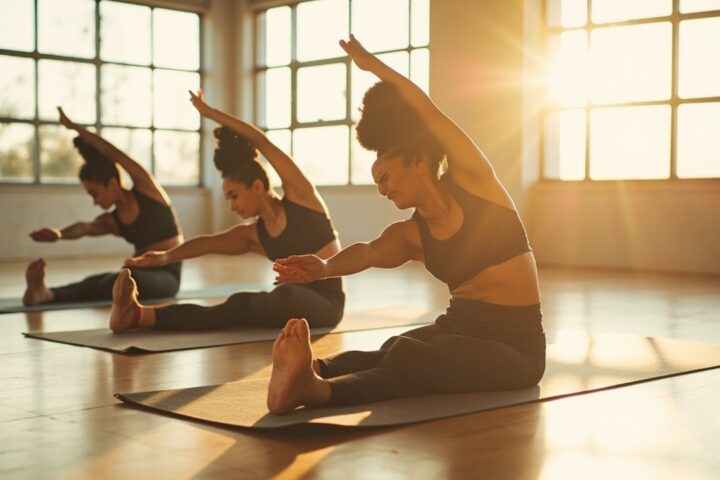
Sit with both legs extended in front of you and your feet flexed. Hinge from your hips, slide your hands toward your shins, ankles, or feet, and keep your spine long until you feel a mild stretch behind your legs. Hold for 20–30 seconds.
Your knees may bend slightly. If you feel tension in your lower back, raise your hips onto a folded towel or sit in a chair and reach toward the floor instead.
6. Figure-four glute stretch
Lie on your back with both knees bent and your feet on the floor. Cross one ankle over the opposite knee, then draw the supporting thigh toward your chest. Hold for 20–30 seconds, switch sides, and repeat.
Keep your head and shoulders relaxed on the floor. You can make the position gentler by keeping the foot farther from your body, or use a chair if getting down to the floor is difficult.
7. Low lunge with a chest opener
Step one foot forward into a low lunge, keeping both hands on the floor inside the front foot. Gently lift your chest and look forward for several breaths. Hold for 20–30 seconds, then switch sides.
Use a shorter stance if your balance feels uncertain. A wall or chair can help. If the position feels crowded, return to a standing hip stretch instead of trying to sink deeper.
8. Standing forward fold
From standing, soften your knees and fold forward, allowing your head and arms to hang. Let your upper body become heavy for 20–30 seconds, then roll up slowly by lifting your head last.
You can bend your knees as much as needed. A half lift with hands on your shins is a good alternative if dangling feels unsteady. Finish by standing tall and taking two or three slow breaths.
This complete morning stretch routine covers the main areas that often feel stiff after sleep. You can repeat the sequence if you have more time, but one pass is enough to begin.
How can you build a morning stretch routine habit?
You can build the habit by connecting the routine to something you already do and by making the first version small enough to repeat. Put it after brushing your teeth, before making coffee, or just after you open the curtains.
- Use a visual cue. Keep a note beside your coffee maker or set a phone reminder labeled “stretch and breathe.”
- Prepare the space. Lay out a mat or clear a small area the night before.
- Start with three movements. On especially rushed days, do shoulder rolls, cat-cow, and a standing forward fold.
- Track streaks, not perfection. Mark the days you stretch, and restart without judgment after a missed day.
- Make it pleasant. Follow the routine with water, music, or quiet time so the experience stays enjoyable.
Your morning stretch routine can also change with the season, your schedule, or how your body feels. Keep the eight-movement framework, but shorten holds, switch to seated options, or add an easy movement you enjoy.
Common mistakes to avoid
- Forcing a deep position: Stay within a comfortable range, especially when your body is cold.
- Bouncing during holds: Let each stretch settle instead of repeatedly pulling farther.
- Holding your breath: Continue slow breathing throughout every position.
- Moving too fast: Slow transitions give your nervous system time to adjust.
- Starting with the hardest stretch: Warm up with small movements before deeper positions.
- Making the routine too complicated: Repeat a short sequence consistently before adding more.
- Ignoring discomfort: Adjust the position or stop rather than trying to push through pain.
Frequently asked questions
Is it better to stretch before or after exercising?
Light stretching can be a comfortable warm-up before a workout, while a more thorough session may help you feel ready afterward. If your goal is flexibility, choose a time when you can move slowly without being rushed.
How long should I hold each morning stretch?
Most of the stretches in this morning stretch routine last 20–30 seconds per side. Longer holds can feel soothing, but comfort matters more than a specific number, and neck stretches may need only about 10 seconds.
Can I do a morning stretch routine in bed?
Yes, seated and supported versions can work in bed, but getting up gives you more freedom for positions such as cat-cow and the figure-four stretch. Avoid movements that require you to balance on a soft or unstable surface.
Do I need yoga experience to follow this routine?
No. The sequence uses basic movements, and each one includes an easier option. Begin with a small range, use a wall or chair for support, and focus on steady breathing rather than matching an advanced pose.
Choose your next step now: open a timer for 10 minutes, clear a safe spot on the floor, and complete the first three stretches. That short beginning gives you an easy routine you can repeat tomorrow.