How to Cook Spaghetti Squash in the Oven: Easy Method ===EXCERGBOOK
Learn how to cook spaghetti squash in the oven with safe cutting, tested roasting times, seasoning ideas, strand tips, and storage guidance.
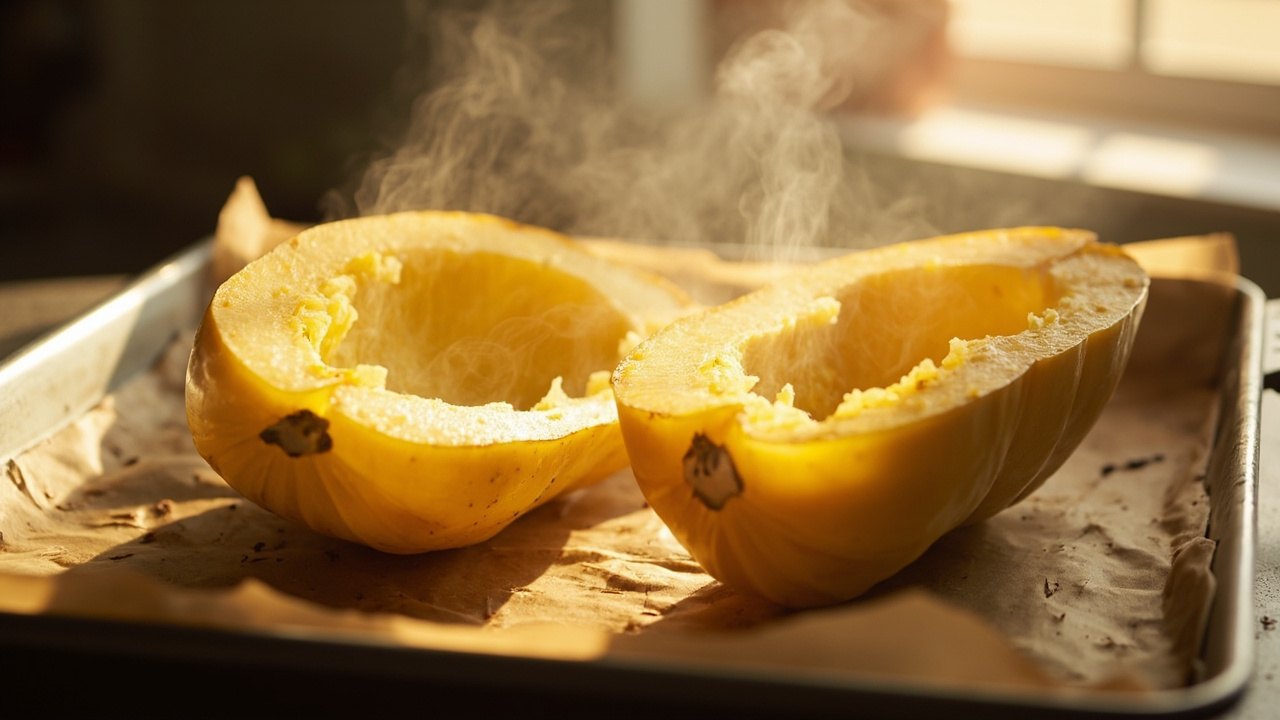
To learn how to cook spaghetti squash in the oven, halve it lengthwise, remove the seeds, place the cut sides down on a lined sheet, roast until tender, then scrape the cooked flesh into spaghetti-like strands. Let it cool enough to handle before serving.
The short version
- Choose a firm, heavy spaghetti squash and cut it lengthwise with a sturdy, sharp knife.
- Place the squash cut-side down on an oiled or lined baking sheet.
- Roast at 400°F for about 35–45 minutes, or until a fork slides easily into the flesh.
- Cool briefly, then scrape the tender flesh into strands with a fork or spoon.
What do you need to roast spaghetti squash?
You need very little beyond a spaghetti squash, a baking sheet, and a way to heat your oven. A parchment-lined sheet or silicone baking mat helps keep the released juices from sticking and makes cleanup easier. A light coating of olive oil on the cut surface also helps, although the cut-side-down method does most of the work of preventing sticking.
- Spaghetti squash: Choose one that feels heavy for its size and has a firm, even-colored rind. Avoid squash with soft spots, deep cracks, or mold.
- Baking sheet: Use a rimmed sheet so the squash does not release juice directly onto your oven rack. If the halves are large, use a sheet with enough room for them to sit flat.
- Liner: Parchment paper or a silicone mat is convenient, but a well-oiled sheet also works.
- Oil: Extra-virgin olive oil, avocado oil, or another neutral oil is fine. The oil seasons the squash and helps the exposed edges stay moist.
- Seasoning: Keep it simple with salt, black pepper, garlic powder, or Italian seasoning. You can add herbs and cheese after roasting.
Before you begin, preheat the oven to 400°F. That temperature gives the flesh enough time to soften while keeping the exterior pleasantly roasted. If your oven runs noticeably cooler or hotter, begin checking the squash earlier rather than relying only on the clock.
How do you safely halve spaghetti squash?
Halving a spaghetti squash is usually the most important—and most intimidating—part of the job. The rind is firm but the squash can roll slightly, so a stable cutting surface and a sharp knife make the task safer.
- Wash the outside. Rinse the whole squash under cool running water and scrub away any dirt. You will not eat the rind, but washing it prevents grit from transferring to your knife and cutting board.
- Trim the ends. Cut off the stem and the bottom end just enough to create a flat surface. This lets the squash sit securely instead of rolling.
- Position it lengthways. Place the squash with its long axis running away from you. Hold it firmly with one hand, keeping your fingers clear of the knife’s path.
- Cut lengthwise. Use a sturdy chef’s knife and press steadily through the center. If the knife feels likely to slip, stop and use a different, more suitable knife rather than forcing it.
- Remove the seeds. Scoop out the soft seeds and stringy pulp with a spoon. A clean cavity will leave more room for the flesh to roast evenly.
If you do not have enough confidence to cut the squash lengthwise, you can ask someone to steady it for you or use a helper designed for cutting round vegetables. Taking your time is safer than rushing through a dense rind.
How to cook spaghetti squash in the oven
The reliable method is to roast the squash cut-side down, where the steam from the moist flesh cooks the strands while the exposed rind dries and caramelizes slightly.
- Heat the oven. Set the oven to 400°F and place a rack in the middle. Let the oven reach temperature while you prepare the squash.
- Prepare the sheet. Line a baking sheet with parchment paper or a silicone mat, or lightly oil the metal. Set the halves cut-side down, with the cut surfaces resting flat.
- Season lightly. Drizzle the exposed cut surfaces with a little oil and sprinkle with salt and pepper if desired. Because the squash will release water as it cooks, restraint works better than a heavy coating of oil or seasoning.
- Roast. Bake for 35–45 minutes at 400°F. Large halves may take closer to the longer end of the range, while smaller pieces may be ready sooner.
- Check for tenderness. Use a fork or the tip of a knife to test the thickest part. It should slide into the flesh with little resistance. If the squash still feels firm, give it another 5–10 minutes.
- Cool briefly. Remove the sheet from the oven and let the squash rest for about 5–10 minutes. It will be hot, and the strands will hold together more neatly once the temperature drops a little.
- Scrape the strands. Hold the roasted half in one hand and scrape its length with a fork, spoon, or spatula. The flesh should separate into tender, pale yellow strands.
For the best texture, scrape from the rind toward the center and leave the tougher outer flesh behind. Do not scrape too aggressively; you want strands, not mashed squash. A second pass with the fork can pick up any pieces that were left behind.
How long does spaghetti squash take to cook in the oven?
At 400°F, spaghetti squash generally takes 35–45 minutes to roast until tender. The size and maturity of the squash matter more than the exact number of minutes, so use tenderness as your final test.
| Roasting temperature | Typical time | What to expect |
|---|---|---|
| 350°F | 45–60 minutes | More gentle browning and a moist interior |
| 375°F | 40–50 minutes | A useful middle range for evenly sized squash |
| 400°F | 35–45 minutes | Easy browning and reliable tenderness |
| 425°F | 30–40 minutes | Faster cooking with more browned edges |
To check doneness, press the fork into the center of the cut face, avoiding the rind. If it meets noticeable resistance, the squash needs more time. If it slides through easily but the strands still look watery, let it rest on the sheet for a few additional minutes; some water will absorb or evaporate.
One sign of undercooked squash is a firm, almost rubbery layer right next to the rind. That layer may scrape away easily while the middle remains solid. Another sign is a hollow or raw smell rather than a sweet, cooked aroma. If in doubt, roast for another short interval and test again.
How do you make spaghetti squash strands?
The strands are not created by a special tool; they come from the squash’s natural fibers, which become tender during roasting and separate when you scrape the flesh.
- Use a fork for the most familiar texture. Press the tines into the cooked flesh and pull toward the rind. Several passes create long, noodle-like strands.
- Try a spoon for shorter pieces. Scrape the flesh with the back of a spoon for a softer, more compact serving.
- Keep the heat low. Scrape only after the squash has cooled enough to handle comfortably. Very hot squash can tear and release extra moisture.
- Season after scraping. Salt and pepper are often more noticeable on the finished strands than on the raw cut surface.
Easy seasoning combinations
- Garlic and Parmesan: Toss the strands with minced garlic, grated Parmesan, olive oil, salt, and pepper.
- Tomato and basil: Add warm marinara or crushed tomatoes, then finish with fresh basil leaves.
- Italian-style: Mix in Italian seasoning, grated Parmesan or pecorino, and a drizzle of olive oil.
- Herby and bright: Combine lemon zest, chopped parsley or cilantro, and a squeeze of lemon juice.
- Spiced: Use cumin, smoked paprika, chili flakes, and a little honey or maple syrup for a sweet-savory flavor.
You can also serve the strands with pesto, roasted vegetables, shredded chicken, beans, or a simple butter-and-herb sauce. Since the squash is mild and somewhat watery, strongly flavored sauces and dressings work especially well.
Can you prepare spaghetti squash ahead of time?
Yes, and meal preparation can make spaghetti squash much easier to fit into a busy week. You can roast the squash fully, chill it, and reheat the strands when you are ready to eat.
- Roast the squash as directed until the flesh is tender.
- Let it cool for 10–15 minutes, then scrape the strands from the rind.
- Store the strands in an airtight container in the refrigerator.
- Use them within 3–4 days for the best texture, or freeze them in individual portions for longer storage.
For reheating, warm the strands in a skillet over low heat with a small splash of oil or a spoonful of sauce. A microwave works too, but stirring halfway through helps distribute the heat. Add fresh herbs, grated cheese, or citrus juice after reheating to restore brightness.
You can also roast the squash and leave it unscrambled in its shell. Cover the cut halves and refrigerate them for up to 3–4 days. Scrape the strands shortly before serving. This is a good option when you want to avoid handling the cooked squash twice.
Common mistakes to avoid
- Cutting across the squash instead of lengthwise. Cutting crosswise produces short, rounded pieces rather than long strands.
- Leaving the seeds and pulp inside. The center should be scooped clean so the flesh can cook evenly.
- Roasting cut-side up for the main cooking step. The exposed surface dries out, and the squash can scorch before the interior softens.
- Using a dull knife. A sharp chef’s knife is safer and gives you a cleaner cut through the firm rind.
- Trusting the timer alone. Check the squash with a fork, especially if the pieces are unusually large or small.
- Scraping the flesh while it is extremely hot. Let it rest so the strands separate cleanly and you do not risk burning your fingers.
- Over-salting before roasting. The squash releases water, so it is usually best to season lightly at first and adjust after tasting.
Frequently asked questions
Do you peel spaghetti squash before cooking it?
No. Leave the rind on while roasting. It holds the squash together, protects the delicate interior, and becomes easier to remove once the flesh is tender. If the exterior looks rough after cooking, scrape off any browned spots before serving.
Should spaghetti squash be roasted cut-side down or up?
Roast it cut-side down for the most tender, evenly cooked result. The trapped steam softens the inside while the outer surface stays protected. If you prefer more browning, you can turn the halves over for the final few minutes, but watch them closely.
Can you cook spaghetti squash without oil?
Yes. A lined or well-oiled sheet can prevent sticking, and the squash’s own moisture is enough to roast successfully. A little oil adds flavor and helps the edges stay soft, but it is not essential.
How do you know when spaghetti squash is done?
The flesh should be very soft, and a fork should slide into the thickest part with little resistance. The squash should smell sweet and cooked rather than raw. If the strands scrape apart easily but the center feels firm, give it another 5–10 minutes.
Once you know how to cook spaghetti squash in the oven, start with a firm squash, cut it safely, and roast it cut-side down at 400°F until a fork moves through the center easily. Season the strands afterward, then serve them with your favorite sauce or keep them chilled for a quick meal later in the week.